![Why It’s Easy to Fall in Love with Homeownership [INFOGRAPHIC] | MyKCM](https://files.mykcm.com/2021/02/11131328/20210212-MEM-1046x1399.png)
Area Real Estate News & Market Trends
You’ll find our blog to be a wealth of information, covering everything from local market statistics and home values to community happenings. That’s because we care about the community and want to help you find your place in it. Please reach out if you have any questions at all. We’d love to talk with you!
Feb. 15, 2021
Why It’s Easy to Fall in Love with Homeownership [INFOGRAPHIC]
Posted in
Buying Tips
no comments yet

Feb. 11, 2021
4 Home Projects to Invest in This Year
You probably don’t wake up every morning and think, “How can I invest in my home today?” But it is something you should keep at the forefront of your mind if you want to improve both your quality of life and your financial future.
Here are some of the best projects to invest in if you’re looking to get the biggest bang for your buck.
Flooring options
It’s no secret that a house with hardwood floors is a hot commodity, but whether or not your current residence has them, it’s advised that you invest in them. When it comes time to sell your home, hardwood floors can bring you a return on investment (ROI) between 70 and 80 percent.
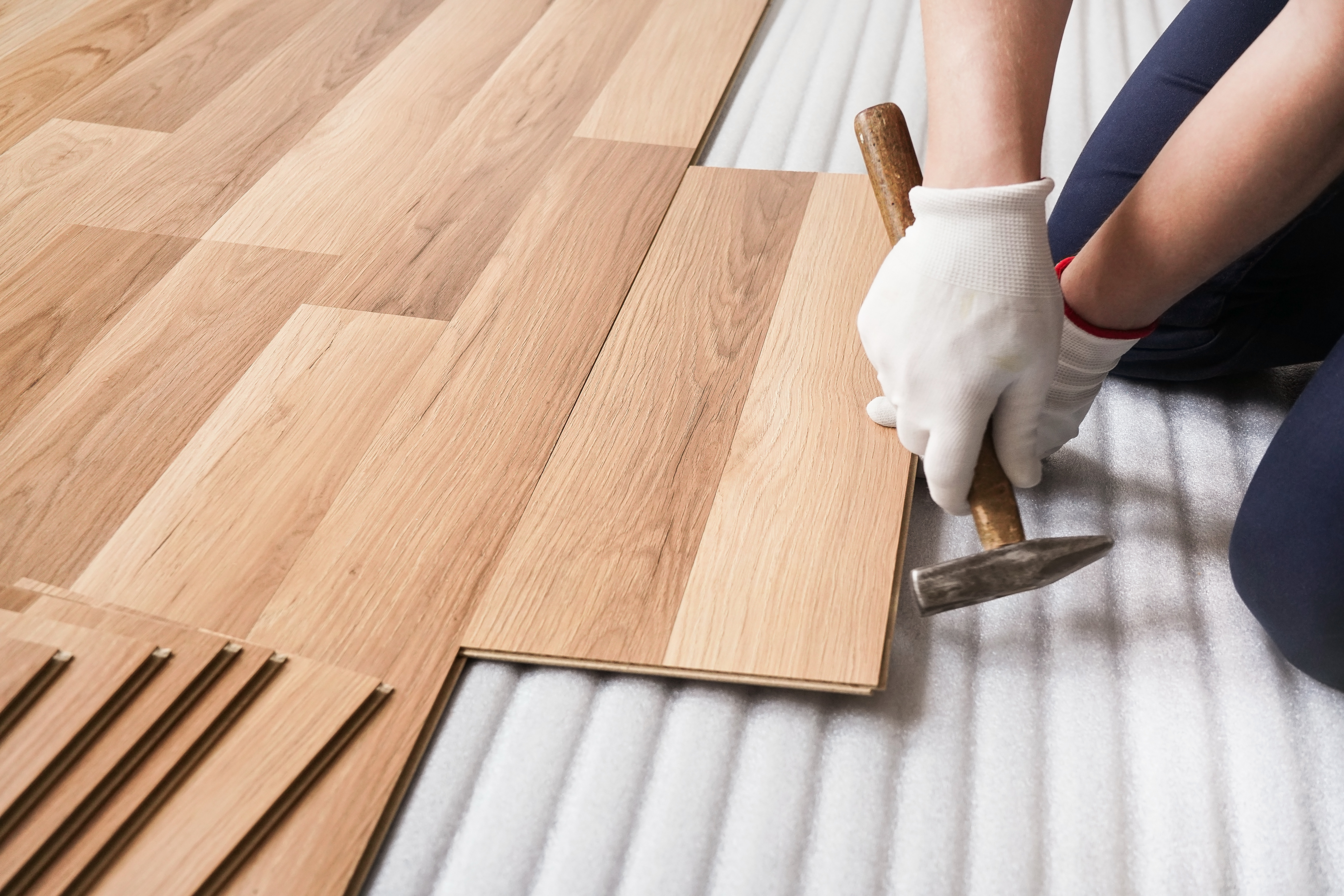
-
IF YOU ALREADY HAVE HARDWOOD FLOORS:
Ripping up carpet to expose the original hardwood and sanding floors yourself can save you money, but it may also end up costing you more in the long run if done incorrectly. Your best bet is to hire a professional to do it for you. You could also have a professional sand your floors and then tackle the staining yourself. Some of the most popular flooring stain shades include mahogany (a deep color that looks classy and expensive), pine (colors can vary, giving you a variety of options), and gray (popular for its modern look). -
IF YOU DON’T HAVE HARDWOOD FLOORS:
Installing new hardwood floors can be expensive, but if you’re still not convinced about the investment, a 2019 report from the National Association of REALTORS® concludes that homeowners who installed new wood floors recovered an average of $5,000 from the project. In addition, 78 percent of people reported feeling a “major sense of accomplishment” afterward. If you live in a warmer, humid climate, you might want to consider installing stone or ceramic tile instead, as wood can often warp under these conditions. Ceramic tile can give you a return of about 70 percent, and stone fetches between 55 and 70 percent.
Kitchen upgrade
When it comes to improving resale value, there’s no question that an upgraded kitchen is among the most recommended projects. An upgraded kitchen, especially with many of us spending more time at home, can work wonders. In the same 2019 NAR report, 74 percent of people said an upgraded kitchen made them feel happier while at home, and 20 percent said their upgraded kitchen was the defining factor in securing their home’s sale.

Keep in mind, an upgraded kitchen does not have to mean a complete renovation. Talking to a real estate agent can help you better understand the kinds of upgrades buyers in your area are looking for. These are a few improvements that can dramatically expand the look and feel of this space:
 Reserve the majority of your renovation savings for updated appliances.
- Instead of buying new cabinets, paint them a neutral shade or reface them for a modern look.
- A new backsplash is an inexpensive way to add a pop of color to your kitchen. Take into consideration the color palette you have established, and find tile in a shade that complements it.
- Install new lighting, such as small lights under cabinets or recessed lighting above countertops, to give your kitchen a bright and fresh appearance.
Basement or attic conversion
The COVID-19 pandemic has forced many homeowners to reconsider how they were using extra space in their homes. The demand for added work space for both adults and children is greater than ever, and upgrading a basement or an attic is a great way to make use of areas you already have without shelling out cash to build an addition. Although a small percentage of real estate agents recommended making this kind of upgrade before selling pre-2020, 85 percent of homeowners reported a “greater desire to be home” post-renovation, and the desire to update these spaces is only increasing. Below are some of the most popular ways to make use of such spaces:
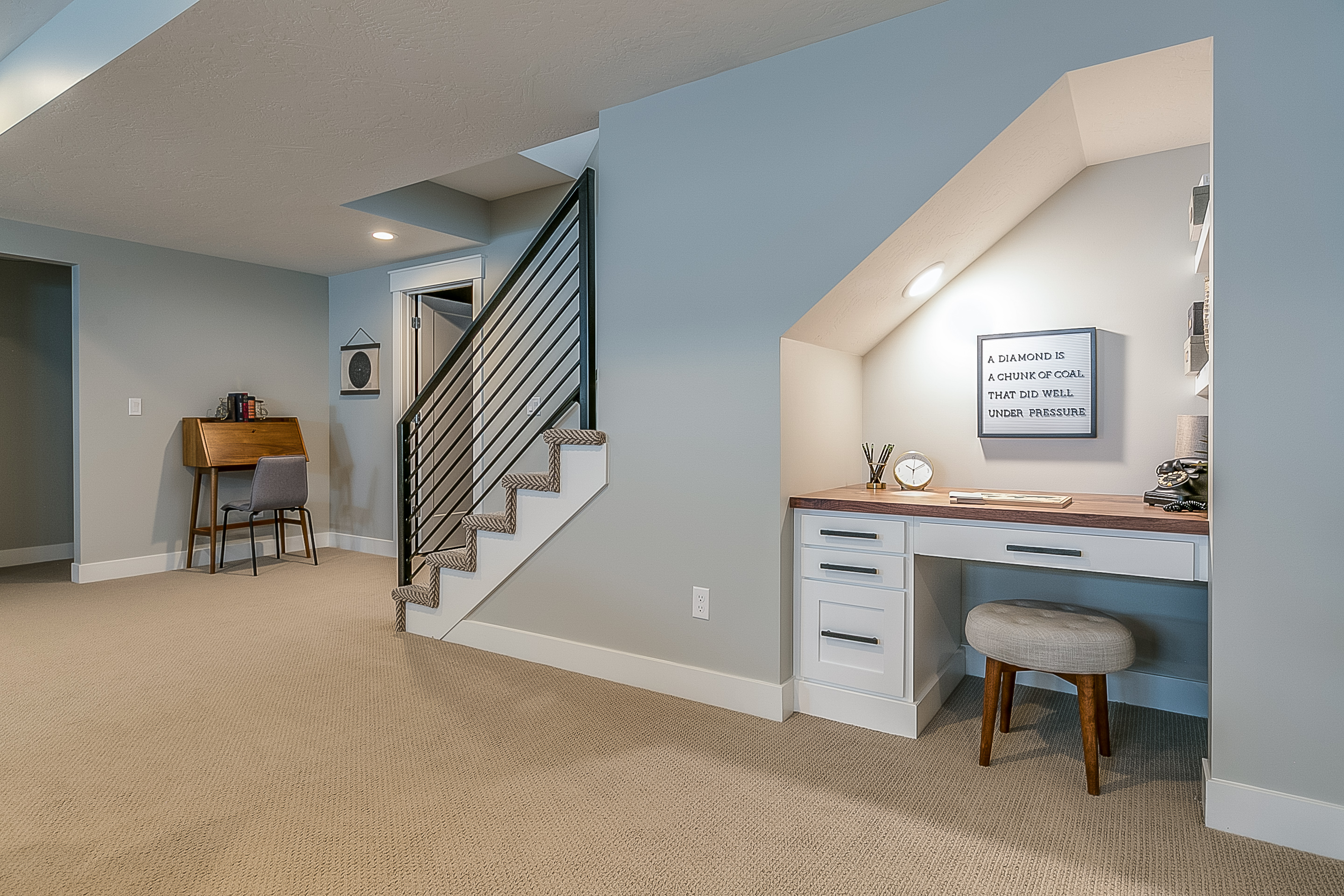
-
OFFICE/HOMESCHOOL SPACE
Having a dedicated workspace can dramatically improve productivity and focus for adults and children alike. Creating an office in one of these areas won’t take much time, money, or effort, and it can come together with just a few pieces. For an office, invest in a solid corner desk with plenty of storage space or a small desk and external storage cabinets for important paperwork. For a homeschooling area, consider purchasing a small desk or table (multiple ones if more than one child will be working at the same time), a colorful carpet, and a bookcase and comfortable chairs (e.g., beanbags) for a cozy reading nook. -
HOME GYM
You can throw a few weights and a yoga mat on the floor and call it a home gym, but crafting a space primed for fitness can greatly contribute to your desire to work out and help future buyers imagine themselves in your home. Consider installing heavy-duty flooring, like rubber mats or a deadlift platform, either of which can protect concrete flooring underneath. You could also install a rack on the wall for storing free weights and a large mirror to watch your form and provide the feel of a real gym. -
FAMILY REC ROOM
One of the most popular uses for a finished basement or attic is recreation for the whole family. This will mean something different for everyone, but a television hook-up, a built-in entertainment system, or even a wet bar can improve your life at home. You don’t have to go all out and purchase a pool table, a pinball machine, and a $2,000 speaker system, either. Something as simple as an L-shaped sofa, a movie projector, or a gaming system can keep costs low while adding major entertainment value to these spaces.
Outdoor spaces
You might already know that curb appeal and landscaping are two of the most important areas to invest in before selling, but it’s not just about improving your exterior visually; functionality is more important than ever for your outdoor spaces. Improved landscaping can bring as much as 100 percent return on your investment, but the benefits it brings to the quality of your experiences at home can be tremendous as well.
A good place to start is to connect with a local landscaping company or designer to formulate a plan for what you want. Either can help with anything from suggesting minor touch-ups to adding shrubbery to installing new pathways to doing tree removal. This will help you see the bigger picture when it comes to landscaping and ensure you stick to your budget.

-
CLEAR AND CLEAN
You can have the most beautiful house in the world, but if your yard is overgrown with weeds and littered with dead plants, no one will be inclined to take a first look. Before you start planning any new landscaping, you need to make sure your exterior areas are cleaned up and that any dead flowers and plants are removed. If you expect to hire a professional later on for the overall landscaping, this is a great part of the process to tackle yourself to save money. -
COLORFUL FLORA
Adding pops of color to your yard with vibrant flowers and plants is a simple, effective, and relatively low-cost way to change its look. Ask an expert from your local nursery about what varieties you should add based on where you live and what is known to thrive there (which can help with upkeep), and be sure to mark and plan out where you are going to place everything before any digging or planting takes place. An easy way to do this is by placing rulers marked with the name of what you’re planting directly into the soil. -
FUN EXTRAS
A landscaper can help you determine if your yard would benefit from extra design elements, such as a stone pathway leading to your front door, a pergola on your patio, or even a decorative fountain. These items might feel frivolous, but they can actually make a huge difference in the overall look and feel of your outdoor space—boosting your curb appeal by leaps and bounds.
When it comes to investing in your home, you don’t necessarily have to secure thousands of dollars for an addition or completely gut it. Simple improvements, like those mentioned above, are guaranteed to appeal to potential buyers down the line and offer major benefits to you and your family right now.
Posted in
Home Staging Tips
Feb. 10, 2021
Want to Build Wealth? Buy a Home This Year.

Every year, households across the country make the decision to rent for another year or take the leap into homeownership. They look at their earnings and savings and then decide what makes the most financial sense. That equation will most likely take into consideration monthly housing costs, tax advantages, and other incremental expenses. Using these measurements, recent studies show that it’s still more affordable to own than rent in most of the country.
There is, however, another financial advantage to owning a home that’s often forgotten in the analysis – the wealth built through equity when you own a home.
Odeta Kushi, Deputy Chief Economist for First American, discusses this point in a recent blog post. She explains:
“Once you include the equity benefit of price appreciation, owning made more financial sense than renting in 48 out of the 50 top markets, with the only exceptions being San Francisco and San Jose, Calif.”
What has this equity piece meant to homeowners in the past?
ATTOM Data Solutions, the curator of one of the nation’s premier property databases, just analyzed the typical home-price gain owners nationwide enjoyed when they sold their homes. Here’s a breakdown of their findings: The typical gain in the sale of the home (equity) has increased significantly over the last five years.
CoreLogic, another property data curator, also weighed in on the subject. According to their latest Homeowner Equity Insights Report, the average homeowner gained $17,000 in equity in just the last year alone.
What does the future look like for homeowners when it comes to equity?
Here are the seven major home price appreciation forecasts for 2021: The National Association of Realtors (NAR) just reported that today, the median-priced home in the country sells for $309,800. If homes appreciate by 5% this year (the average of the forecasts), the homeowner will increase their wealth by $15,490 in 2021 through increased equity.
Bottom Line
As you make your plans for the coming year, be sure to consider the equity benefits of home price appreciation as you weigh the financial advantages of buying over renting. When you do, you may find this is the perfect time to jump into homeownership.
Posted in
Buying Tips
Feb. 9, 2021
Do I Really Need a 20% Down Payment to Buy a Home?
Is the idea of saving for a down payment holding you back from buying a home right now? You may be eager to take advantage of today’s low mortgage rates, but the thought of needing a large down payment might make you want to pump the brakes. Today, there’s still a common myth that you have to come up with 20% of the total sale price for your down payment. This means people who could buy a home may be putting their plans on hold because they don’t have that much saved yet. The reality is, whether you’re looking for your first home or you’ve purchased one before, you most likely don’t need to put 20% down. Here’s why.
According to Freddie Mac:
“The most damaging down payment myth—since it stops the homebuying process before it can start—is the belief that 20% is necessary.”
If saving that much money sounds daunting, potential homebuyers might give up on the dream of homeownership before they even begin – but they don’t have to.
Data in the 2020 Profile of Home Buyers and Sellers from the National Association of Realtors (NAR) indicates that the median down payment actually hasn’t been over 20% since 2005, and even then, that was for repeat buyers, not first-time homebuyers. As the image below shows, today’s median down payment is clearly less than 20%.
What does this mean for potential homebuyers?
As we can see, the median down payment was lowest for first-time buyers with the 2020 percentage coming in at 7%. If you’re a first-time buyer and putting down 7% still seems high, understand that there are programs that allow qualified buyers to purchase a home with a down payment as low as 3.5%. There are even options like VA loans and USDA loans with no down payment requirements for qualified applicants.
It’s important for potential homebuyers (whether they’re repeat or first-time buyers) to know they likely don’t need to put down 20% of the purchase price, but they do need to do their homework to understand the options available. Be sure to work with trusted professionals from the start to learn what you may qualify for in the homebuying process.
Bottom Line
Don’t let down payment myths keep you from hitting your homeownership goals. If you’re hoping to buy a home this year, let’s connect to review your options.
Posted in
Buying Tips
Feb. 8, 2021
Why Owning a Home Is a Powerful Financial Decision
In today’s housing market, there are clear financial benefits to owning a home: increasing equity, the chance to build your net worth, and appreciating home values, just to name a few. If you’re a renter, it’s never too early to think about how homeownership can propel you toward a stronger future. Here’s a dive into three often-overlooked financial benefits of homeownership and how preparing for them now can steer you in the direction of greater financial security and savings.
1. You Won’t Always Have a Monthly Housing Payment
Personal finance advisor Dave Ramsey explains:
“Every payment brings you closer to owning the house. When you pay your rent, that money is spent. Gone. Bye. Not returning. But when you pay your mortgage, you work toward full ownership.”
As a homeowner, you can eventually eliminate the monthly payment you make on your house. That’s a huge win and a big factor in how homeownership can drive stability and savings in your life. As soon as you buy a home, your monthly housing costs begin to work for you as forced savings in the form of equity. When you build equity and grow your net worth, you can continue to reinvest those savings into your future, maybe even by buying that next dream home. The possibilities are truly endless.
2. Homeownership Is a Tax Break
One thing people who have never owned a home don’t always think about are the tax advantages of homeownership. The same article states:
“You have tax advantages. Many of the costs of owning a home—like property taxes—are tax deductible. And if you’re paying off a mortgage, you’ll get to count your mortgage interest as a deduction when you file your tax return.”
Whether you’re living in your first home or your fifth, it’s a huge financial advantage to have some tax relief tied to the interest you pay each year. It’s one thing you definitely don’t get when you’re renting. Be sure to work with a tax professional to get the best possible benefits on your annual return.
3. Monthly Housing Costs Are Predictable
A third benefit is the fact that monthly costs start to become more predictable with homeownership, something that doesn’t happen if you’re renting. Ramsey also notes:
“Rent rates will go up. Even if you found a killer deal in a hot area, inflation, competition, and rising property values will cause your rent to go up year after year.”
With a mortgage, you can keep your monthly housing costs relatively steady and predictable. Your monthly costs are most likely based on a fixed-rate mortgage, which allows you to budget your finances over a longer period of time. Rental prices have been skyrocketing since 2012, and with today’s low mortgage rates, it’s a great time to get more for your money when purchasing a home. If you want to lock-in your monthly payment at a low rate and have a solid understanding of what you’re going to spend in your mortgage payment each month, buying a home may be your best bet.
Bottom Line
If you’re ready to start feeling the benefits of stability, savings, and predictability that come with owning a home, let’s connect to determine if buying sooner rather than later is right for you.
Posted in
Market News
Feb. 5, 2021
What Record-Low Housing Inventory Means for You

The real estate market is expected to do very well in 2021, with mortgage rates that are hovering at historic lows and forecasted by experts to remain favorable throughout the year. One challenge to the housing industry, however, is the lack of homes available for sale today. Last week, the National Association of Realtors (NAR) released their Existing Home Sales Report, which shows that the inventory of homes for sale is currently at an all-time low. The report explains:
“Total housing inventory at the end of December totaled 1.07 million units, down 16.4% from November and down 23% from one year ago (1.39 million). Unsold inventory sits at an all-time low 1.9-month supply at the current sales pace, down from 2.3 months in November and down from the 3.0-month figure recorded in December 2019. NAR first began tracking the single-family home supply in 1982.”
(See graph below):

What Does This Mean for You?
If You’re a Buyer:
Be patient during your home search. It may take time to find a home you love. Once you do, however, be ready to move forward quickly. Get pre-approved for a mortgage, be prepared to make a competitive offer from the start, and know that a shortage in inventory could mean you’ll enter a bidding war. Calculate just how far you’re willing to go to secure a home and lean on your real estate professional as an expert guide along the way. The good news is, more inventory is likely headed to the market soon, Lawrence Yun, Chief Economist at NAR, notes:
"To their credit, homebuilders and construction companies have increased efforts to build, with housing starts hitting an annual rate of near 1.7 million in December, with more focus on single-family homes…However, it will take vigorous new home construction in 2021 and in 2022 to adequately furnish the market to properly meet the demand."
If You’re a Seller:
Realize that, in some ways, you’re in the driver’s seat. When there’s a shortage of an item at the same time there’s a strong demand for it, the seller is in a good position to negotiate the best possible terms. Whether it’s the price, moving date, possible repairs, or anything else, you’ll be able to request more from a potential purchaser at a time like this – especially if you have multiple interested buyers. Don’t be unreasonable, but understand you probably have the upper hand.
Bottom Line
The housing market will remain strong throughout 2021. Know what that means for you, whether you’re buying, selling, or doing both.
Posted in
Market News
Feb. 4, 2021
What’s New in Garage Door Styles?

Garage doors might not seem like they make much of a difference, but imagine what your home would look like if you just had a flat door where your current garage door stands. Because they take up so much real estate on the front of most homes, garage doors can actually have a huge impact on the way your home looks and feels. So, what do you want your house to say today?
Garage Door Options
Here are some current garage door trends that could speak volumes:
-
Bright Colors. There was a time when garage doors came in muted neutral colors and whites, and absolutely nothing else. Thankfully, those times are in the rearview mirror and we’re living in a far more enlightened – and vibrant – age. Bright colors can help enhance especially interesting woodwork on garage doors, complement homes with a lot of color, like Spanish styles or Victorians, or make fancy hardware pop like nothing else. Be careful with bright colors, though, because there is such a thing as too much; you can end up overwhelming the rest of your home if you don’t use them with caution. White trim on a brightly colored garage door, for example, can help contain the energy if you need to tone it down a bit.
- Sleek Industrial Lines. There’s something about clean, sharp lines that can turn a modern house into an ultra modern one. Those industrial lines are still a hot commodity, as are glass panels in nearly invisible aluminum frames. The look isn’t right for every home, but an industrial garage door can be an incredibly flexible design element, especially when placed against square-cut stone, dark colored shiplap, or natural wood siding.
- Country Cottage Styling. The whole country cottage meets industrial hardware look has really had some staying power. Not only does it give a big helping of nostalgia to a lot of people, it also makes it easier to blend more modern elements into older homes that may have been seriously deprived of any sense of self by excessively generic remodels of the 80s, 90s, and early 2000s. It may come as no surprise, then, that garage doors that are designed to echo the same look are also super popular. Choose carriage house doors or doors that resemble barn doors for an industrial cottage look beyond the interior of your home. Pairing these garage options with Dutch lap siding or irregular stone or brickwork can really make both the doors and the house pop.
- Natural Wood. Sure, natural wood doors have been available for some time, but never in anywhere near as many designs or tones. Look for solid wood doors for a lot of rustic flair, or choose a synthetic wood door for a modern home to give it a little more earthy feel without all the maintenance. Your industrial homestead can really make a statement with wooden garage doors made from horizontal stripes in different wooden tones.
- Asymmetry. Mid-century modern homes are gaining a lot of popularity these days, but until recently there wasn’t a great garage door complement for them. Say hello to the asymmetrical door. With garage windows on one side rather than across the top, these unusual statement doors are perfectly paired with other square and rectangular outdoor elements, just like what you’d find on a vintage MCM ranch style home. Those side windows still let in a lot of light, while allowing a great deal of security and privacy inside your garage. It’s kind of the whole package.
Posted in
Home Keppr
Feb. 3, 2021
EYE-CATCHING WAYS TO DECORATE WITH PLANTS
Using plants as décor is a great way to add a little color and a natural, bright feel to any room.
There are endless types of plants to choose from and various ways to display each one,
but here are a few of our favorite combinations.
- Geometric pots.
Find geometric pots or planters of various sizes and plant small succulents
of different styles and colors in each one.
Then group a few pots together on a window sill or shelf or use them
individually to adorn a side table or center of the dining room table. - Long, hanging plants.
Purchase a larger, draping plant-like eucalyptus, fern, or ivy and hang it from the ceiling using a
macramé plant hanger or place it on a high shelf or ladder.
These plants are perfect for the corner of your living room or room with a large,
plain wall that is in need of a little pop of color. - Plant corner.
Have a large corner in the dining or living room and need ideas on how to fill it?
Consider turning it into a small plant sanctuary.
Select plants of all different sizes, heights, colors,
and styles and purchase either matching pots or a mix of designs.
Consider the use of a stool or small table to create additional levels
and strategically place each one in the corner. - Air plants.
Air plants are universal and can be included in DIY wall art, hung from the ceiling
or on the wall inside geometric metal prisms, or placed inside beautiful glass terrariums
alongside other plants and colorful rocks or sand.

Posted in
Home Staging Tips
Feb. 2, 2021
CONSIDER THIS: WHEN TO REFINANCE
Refinancing your mortgage is something most homeowners consider at least once throughout
the lifespan of their home loan.
It allows you to pay off your previous loan by applying for a new one that has better
financial advantages.
While there are many good reasons to refinance, here are five common ones.
- Scoring a lower interest rate.
The number one reason homeowners decide to refinance is to secure a lower interest rate
on their mortgage.
Not only does this save you money in the long run and decrease your monthly payment,
but you can start building equity in your home sooner. - Using an improved credit score.
Even if interest rates have not dropped in the market if you’ve improved your credit score over
the last few years,
you may be able to reduce your mortgage rate. - Shortening the loan’s term.
If interest rates are decreasing, there is a chance you may be able to get a shorter loan term
with little to no change in your monthly payment, allowing you to pay off your loan sooner. - Switching from an adjustable-rate to a fixed rate.
If you choose an adjustable-rate mortgage with great introductory rates when you initially
financed your home, that rate may increase significantly over the years.
By switching to a fixed rate while interest rates are low,
you can protect yourself from future increases. - Cashing out home equity.
If there is a big purchase or payment on the horizon, such as funding a wedding
or going back to school, your best option may be to use the equity
you’ve built in your home to borrow money at a lower cost.

Posted in
Buying Tips