Area Real Estate News & Market Trends

You’ll find our blog to be a wealth of information, covering everything from local market statistics and home values to community happenings. That’s because we care about the community and want to help you find your place in it. Please reach out if you have any questions at all. We’d love to talk with you!

Nov. 22, 2022

Home Equity: A Source of Strength for Homeowners Today
Home Equity: A Source of Strength for Homeowners Today

Home Equity: A Source of Strength for Homeowners Today | MyKCM

Experts agree there’s no chance of a large-scale foreclosure crisis like we saw back in 2008, and that’s good news for the housing market. As Mark Fleming, Chief Economist at First Americansays:

“. . . don’t expect a housing bust like the mid-2000s, as lending standards in this housing cycle have been much tighter and homeowners have historically high levels of home equity, so there likely won’t be a surge in foreclosures.”

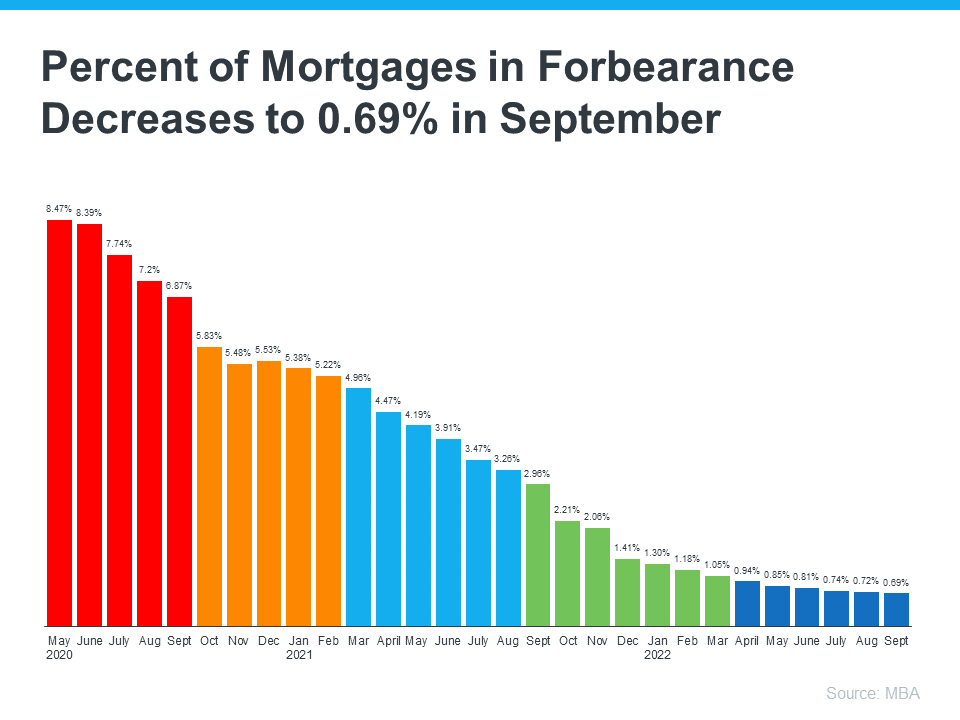
Data from the Mortgage Bankers Association (MBA) helps tell this story. It shows the overall percentage of homeowners at risk is decreasing significantly with time (see graph below):
Home Equity: A Source of Strength for Homeowners Today | MyKCMBut even though the volume of homeowners at risk is very low, there is still a small percentage of homeowners who may be coming face to face with foreclosure as a possibility today. If you’re facing difficulties yourself, it can help to understand your options. It starts with knowing what foreclosure is. Investopedia defines it like this:

Typically, default is triggered when a borrower misses a specific number of monthly payments . . . Foreclosure is the legal process by which a lender attempts to recover the amount owed on a defaulted loan by taking ownership of and selling the mortgaged property.

The good news is there are alternatives available to help you avoid going through the foreclosure process, including:

  • Reinstatement
  • Loan modification
  • Deed-in-lieu of foreclosure
  • Short sale

But before you go down any of those paths, it’s worth seeing if you have enough equity in your home to sell it and protect your investment.

You May Be Able To Use Your Equity To Sell Your House

Equity is the difference between what you owe on the home and its market value based on factors like price appreciation.

In today’s real estate market, many homeowners have far more equity in their homes than they realize due to the home price appreciation we’ve seen over the past few years. According to CoreLogic:

“The total average equity per borrower has now reached almost $300,000, the highest in the data series.”

So, what does that mean for you? If you’ve lived in your house for at least a few years or more, chances are your home’s value, and your equity, has risen dramatically. In addition, the mortgage payments you’ve made during that time chipped away at the balance of your loan. If your home’s current value is higher than what you still owe on your loan, you may be able to use that increase to your advantage.

Rick Sharga, Executive VP of Market Intelligence at ATTOM Dataexplains how equity can help:

“Very few of the properties entering the foreclosure process have reverted to the lender at the end of the foreclosure. . . We believe that this may be an indication that borrowers are leveraging their equity and selling their homes rather than risking the loss of their equity in a foreclosure auction.”

Lean on Experts To Explore Your Options

To find out how much equity you have, work with a local real estate professional. They can give you an estimate of what your house could sell for based on recent sales of similar homes in your area. You may be able to sell your house to avoid foreclosure.

If you find out you have to pursue other options, your agent can help with that too. They’ll be able to connect you with other professionals in the industry, like housing counselors, who can look into your unique situation and offer advice on next steps if selling isn’t your best alternative.

Bottom Line

If you’re a homeowner facing hardship, let’s connect so you have an expert on your side to explore your options and see if you can sell your house to avoid foreclosure.


Posted in Market Updates
Nov. 15, 2022

Why It May Be Time To Add Newly Built Homes to Your Search

Why It May Be Time To Add Newly Built Homes to Your Search

Why It May Be Time To Add Newly Built Homes to Your Search | MyKCM

If you put a pause on your home search because you weren’t sure where you’d go once you sold your house, it might be a good time to get back into the market. If you’re willing to work with a trusted agent to consider a newly built home, you may have even more options and incentives than you realize. That may be why the National Association of Home Builders (NAHB) says the share of buyers looking for new construction is increasing:

“According to the quarterly Housing Trends Report, the popularity of new construction homes is continuing to rebound . . .”

Here’s a few reasons more buyers may be drawn to newly built homes.

More Options To Choose from and Potential Builder Incentives

When looking for a home, you can choose between existing homes (those that are already built and previously owned) and newly constructed ones. While the inventory of existing homes has increased this year, it’s still below more typical years like 2019. Currently, according to the National Association of Realtors (NAR), there is a 3.2-month supply at the current sales pace. For reference, a roughly 6-month supply is considered a balanced market, leaving us in a sellers’ market today.

While it’s a smaller segment of the overall inventory of homes for sale, the supply of newly built homes has grown even more. The National Association of Home Builders (NAHB) explains:

New single-family home inventory remained elevated at a 9.2 months’ supply (of varying stages of construction). A measure near a 6 months’ supply is considered balanced.”

Here’s why this matters for you. While you have more homes to choose from in either category, there’s one extra benefit of newly built homes. Because the inventory of newly built homes has grown so much, builders are motivated to sell their properties before they build more.

Back in the housing crash of 2008, builders were building too many homes, and that oversupply is part of what contributed to the housing bubble bursting. Now, builders don’t want to have a surplus of inventory in their pipeline, and many are offering buyers incentives to help move that inventory along. As Doug Duncan, Chief Economist at Fannie Maeexplains:

“. . . a continual increase in the number of completed homes available for sale is now occurring, with the inventories of such homes now at the highest level since July 2020. . . . This suggests to us that builders may be increasingly willing to offer more aggressive incentives and discounts to maintain sales of completed inventory.”

While specifics will vary by builder and market, some buyers are seeing builders reduce prices and offer incentives. To find out what’s available in your area, lean on a trusted real estate professional.

Lifestyle Benefits of Buying a Newly Built Home

In addition to more supply and the potential for builder incentives, newly built homes have various benefits that may suit your lifestyle. For example, you likely won’t have as many little repairs to tackle, like leaky faucets, shutters to paint, and other odd jobs around the house. That can free up time for you to do other things you’re passionate about.

Another perk of a new home is that nothing in the house is used. It’s brand new and uniquely yours from day one. You’ll have all new appliances, windows, roofing, and more. These things can help lower your energy costs, which can add up to significant savings over time. You may even have the latest and greatest technology features built into your new home.

Builder sums up why some buyers today are turning to newly built homes:

“For some, it’s the lure of something new and modern. For others, it’s the move-in ready experience. And now there’s another factor to consider when making this decision: technology.”

If any of these benefits appeal to you, it’s time to connect with a trusted real estate advisor to learn more.

Bottom Line

If you’re considering a newly built home, let’s connect so you have an expert guide on what’s available in our local market. Together we’ll explore your options and the benefits of an all-new home.

Posted in Buying Tips
Nov. 8, 2022

Taking the Fear out of Saving for a Home

Taking the Fear out of Saving for a Home

Taking the Fear out of Saving for a Home | MyKCM

If you’re planning to buy a home, knowing what to budget for and how to save may sound scary at first. But it doesn’t have to be. One way to take the fear out of budgeting is understanding some of the costs you might encounter.  And to do that, turn to trusted real estate professionals. They can help you plan your finances and prepare your budget.

Here are just a few costs experts say you can expect.

1. Down Payment

Saving for your down payment is likely top of mind as you set out to buy a home. But do you know how much you’ll need to save? While each situation is different, there’s a common misconception that putting 20% down toward your purchase is required. An article from the Mortgage Reports explains why that’s not always the case:

“The idea that you have to put 20% down on a house is a myth. . . . The right amount depends on your current savings and your home buying goals.”

To understand your options, partner with a trusted real estate professional to go over the various loan types, down payment assistance programs, and what each one requires.

2. Closing Costs

Make sure you also budget for closing costs, which are a collection of fees and payments made to the various people involved in your transaction. Bankrate explains:

Closing costs are the fees you pay when finalizing a real estate transaction, whether you’re refinancing a mortgage or buying a new home. These costs can amount to 2 to 5 percent of the mortgage so it’s important to be financially prepared for this expense.”

The best way to understand what you’ll need at the closing table is to work with a trusted lender. They can provide you with answers to the questions you might have.

3. Earnest Money Deposit

If you want to cover all your bases, you can also consider saving for an earnest money deposit (EMD). An EMD is money you pay as a show of good faith when you make an offer on a house. According to realtor.com, it’s usually between 1% and 2% of the total home price.

This deposit works like a credit. It’s not an added expense – it’s paying a portion of your costs upfront. You’re using some of the money you already saved for your purchase to show the seller you’re committed and serious about their house. Realtor.com describes how it works as part of your sale:

It tells the real estate seller you’re in earnest as a buyer, . . . . Assuming that all goes well and the buyer’s good-faith offer is accepted by the seller, the earnest money funds go toward the down payment and closing costs. In effect, earnest money is just paying more of the down payment and closing costs upfront.”

Keep in mind, an EMD isn’t required, and it doesn’t guarantee your offer will be accepted. It’s important to work with a real estate advisor to understand what’s best for your situation and any specific requirements in your area. They’ll help you determine what moves you should make in the homebuying process to have the greatest success.

Bottom Line

Budgeting for your home purchase doesn’t have to be scary. Let’s connect so you’ll have an expert on your side to answer any questions you have along the way.

Posted in Buying Tips
Oct. 25, 2022

Two Questions Every Homebuyer Should Ask Themselves Right Now

Two Questions Every Homebuyer Should Ask Themselves Right Now

Two Questions Every Homebuyer Should Ask Themselves Right Now | MyKCM

Rising interest rates have begun to slow an overheated housing market as monthly mortgage payments have risen dramatically since the beginning of the year. This is leaving some people who want to purchase a home priced out of the market and others wondering if now is the time to buy one. But this rise in borrowing cost shows no signs of letting up soon.

Economic uncertainty and the volatility of the financial markets are causing mortgage rates to rise. George Ratiu, Senior Economist and Manager of Economic Research at realtor.comsays this:

“While even two months ago rates above 7% may have seemed unthinkable, at the current pace, we can expect rates to surpass that level in the next three months.”

So, is now the right time to buy a home? Anyone thinking about buying a home today should ask themselves two questions:

1. Where Do I Think Home Prices Are Heading?

There are two places to turn to answer this question. First is the consensus of what experts are saying. If you look at what experts are projecting for home prices in 2023, they’re forecasting home price appreciation around 2%. While it’s true some are calling for depreciation, most are calling for appreciation in home values over the next year.

The second spot to turn to for information is the Home Price Expectation Survey from Pulsenomics – a survey of a national panel of over one hundred economists, real estate experts, and investment and market strategists. According to the latest release, the experts surveyed are also calling for home price appreciation for the next several years (see graph below):

Two Questions Every Homebuyer Should Ask Themselves Right Now | MyKCM

2. Where Do I Think Interest Rates Are Heading?

Like mentioned above, Ratiu sees mortgage rates rising over the next several months. Another expert agrees. Mark Fleming, Chief Economist at First Americansays:

“While mortgage rates are expected to continue to drift higher over the coming months, much of the rapid increase in rates is likely behind us.” 

The instability in the world and higher inflation are driving this volatile market, resulting in higher borrowing rates for those looking to buy homes.

Bottom Line

If you’re thinking about buying a home, asking yourself about home prices and mortgage rates will help you make a powerful and confident decision. Experts see both prices and rates rising in the future. The alternative is to rent, but rents are also increasing. That may mean buying a home makes more sense than renting.

Posted in Buying Tips
Oct. 18, 2022

What Are Experts Saying About the Fall Housing Market?

What Are Experts Saying About the Fall Housing Market?

What Are Experts Saying About the Fall Housing Market? | MyKCM

The housing market is rapidly changing from the peak frenzy it saw over the past two years. That means you probably have questions about what your best move is if you’re thinking of buying or selling this fall.

To help you make a confident decision, lean on the professionals for insights. Here are a few things experts are saying about the fall housing market.

Expert Quotes for Fall Homebuyers

A recent article from realtor.com:

This fall, a more moderate pace of home selling, more listings to choose from, and softening price growth will provide some breathing room for buyers searching for a home during what is typically the best time to buy a home.”

Michael Lane, VP and General Manager, ShowingTime:

Buyers will continue to see less competition for homes and have more time to tour homes they like and consider their options.” 

Expert Quotes for Fall Sellers

Selma Hepp, Interim Lead of the Office of the Chief Economist, CoreLogic:

“. . . record equity continues to provide fuel for housing demand, particularly if households are relocating to more affordable areas.”

Danielle Hale, Chief Economist, realtor.com:

“For homeowners deciding whether to make a move this year, remember that listing prices – while lower than a few months ago – remain higher than in prior years, so you're still likely to find opportunities to cash-in on record-high levels of equity, particularly if you've owned your home for a longer period of time.”

Bottom Line

Mortgage rates, home prices, and the supply of homes for sale are top of mind for buyers and sellers today. And if you want the latest information for our area, let’s connect today.

Posted in Market Updates
Oct. 11, 2022

Is a Major Home Renovation Worth It in the Long Run?

Is a Major Home Renovation Worth It in the Long Run?

Is a Major Home Renovation Worth It in the Long Run? | MyKCM

Last week, we shared 7 Factors To Consider When Choosing A Home To Retire In.” For some homeowners, these seven factors can be taken into account with a home renovation, but is it worth it to remodel or change floor plans?

Let’s look at this example.

Let’s say you have a 4-bedroom colonial style home in a great school district. The neighborhood is amazing, and you are very comfortable there, but your kids are all grown up and the original benefits of the home no longer apply.

You’ve always wanted a huge master suite and are considering merging 3 of the smaller bedrooms on the second floor to achieve this dream.

In the short term, you are over the moon excited about your newly renovated oasis.

In the long term, when you go to sell your home down the road, you’ve now taken a 4-bedroom home in a great school district and turned it into a 2-bedroom home. Your pool of potential buyers has shrunk significantly and so has the value of your home (unless you are able to find someone who has the exact needs you have today!).

Why not consider listing your 4-bedroom home now and moving into a gorgeous 2-bedroom with a master suite? Your house can become a home for the next family looking for that perfect neighborhood with a great school district to raise their kids in!

You may even be able to achieve your dream in the same area you love, without having to give up your favorite restaurants and grocery stores.

Bottom Line

If you are debating a major renovation that would change the layout of your home, before you pick up that sledgehammer, let’s get together and discuss the available listings in our area that might meet your needs today!

Posted in Selling Tips
Oct. 4, 2022

How an Expert Can Help You Understand Inflation & Mortgage Rates

How an Expert Can Help You Understand Inflation & Mortgage Rates

How an Expert Can Help You Understand Inflation & Mortgage Rates | MyKCM

If you’re following today’s housing market, you know two of the top issues consumers face are inflation and mortgage rates. Let’s take a look at each one.

Inflation and the Housing Market

This year, inflation reached a high not seen in forty years. For the average consumer, you probably felt the pinch at the gas pump and in the grocery store. It may have even impacted your ability to save money to buy a home.

While the Federal Reserve is working hard to lower inflation, the August data shows the inflation rate was still higher than expected. This news impacted the stock market and fueled conversations about a recession. It also played a role in the Federal Reserve’s decision to raise the Federal Funds Rate last week. As Bankrate says:

“. . . the Fed has raised rates again, announcing yet another three-quarter-point hike on September 21 . . . The hikes are designed to cool an economy that has been on fire. . .”

While their actions don’t directly dictate what happens with mortgage rates, their decisions have contributed to the intentional cooldown in the housing market. A recent article from Fortune explains:

“As the Federal Reserve moved into inflation-fighting mode, financial markets quickly put upward pressure on mortgage rates. Those elevated mortgage rates . . . coupled with sky-high home prices, threw cold water onto the housing boom.”

The Impact on Rising Mortgage Rates

Over the past few months, mortgage rates have fluctuated in light of growing economic pressures. Most recently, the average 30-year fixed mortgage rate according to Freddie Mac ticked above 6% for the first time in well over a decade (see graph below):

How an Expert Can Help You Understand Inflation & Mortgage Rates | MyKCM

The mortgage rate increases this year are the big reason buyer demand has pulled back in recent months. Basically, as rates (and home prices) rose, so did the cost of buying a home. That pushed on affordability and priced some buyers out of the market, so home sales slowed and the inventory of homes for sale grew as a result.

Where Experts Say Rates and Inflation Will Go from Here

Moving forward, both of these factors will continue to impact the housing market. A recent article from CNET puts the relationship between inflation and mortgage rates in simple terms:

“As a general rule, when inflation is low, mortgage rates tend to be lower. When inflation is high, rates tend to be higher.”

Sam Khater, Chief Economist at Freddie Mac, has this to say about where rates may go from here:

“Mortgage rates remained volatile due to the tug of war between inflationary pressures and a clear slowdown in economic growth. The high uncertainty surrounding inflation and other factors will likely cause rates to remain variable, . . .”

While there’s no way to say with certainty where mortgage rates will go from here, there is something you can do to stay informed, and that’s connect with a trusted real estate advisor. They keep their pulse on what’s happening today and help you understand what the experts are projecting. They can provide you with the best advice possible.

Bottom Line

Rising inflation and higher mortgage rates have had a clear impact on housing. For expert insights on the latest trends in the housing market and what they mean for you, let’s connect.

Posted in Market News
Sept. 27, 2022

Watching the Stock Market? Check the Value of Your Home for Good News.

Watching the Stock Market? Check the Value of Your Home for Good News.

Watching the Stock Market? Check the Value of Your Home for Good News. | MyKCM

While watching the stock market recently may have started to feel pretty challenging, checking the value of your home should come as welcome relief in this volatile time. If you’re a homeowner, your net worth got a big boost over the past few years thanks to rising home prices. And that increase in your wealth came in the form of home equity. Here’s how it works.

Equity is the current value of your home minus what you owe on the loan. Because there was a significant imbalance between the number of homes available for sale and the number of buyers looking to make a purchase over the past few years, home prices appreciated substantially. And while rising inventory and mortgage rates have cooled the market some in recent months, home prices nationally remain strong.

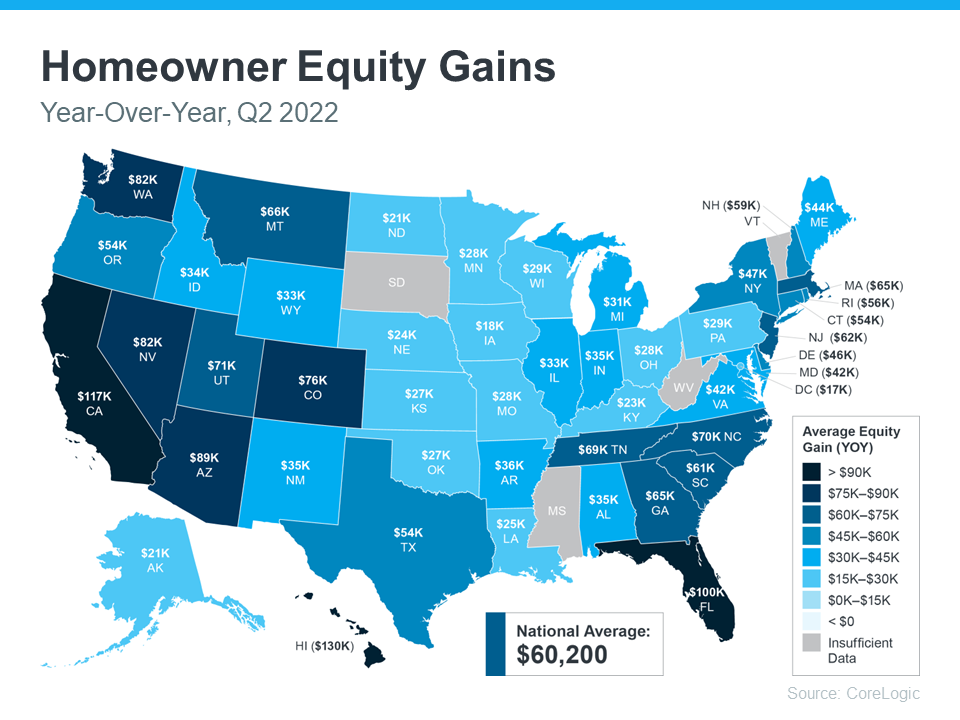
That’s why, according to the latest Homeowner Equity Insights from CoreLogicthe average homeowner equity has grown by $60,000 over the last 12 months. While that’s the national number, if you want to know what happened, on average, over the past year in your area, look at the map below from CoreLogic:

Watching the Stock Market? Check the Value of Your Home for Good News. | MyKCM

Why This Is So Important Right Now

Lawrence Yun, Chief Economist at the National Association of Realtors (NAR), helps explain why this matters so much today:

“. . . the decline in the stock market has dented overall net wealth. It has fallen by $6 trillion from the first to the second quarter. Only housing wealth has held on, with homeowners' real estate wealth (home value minus mortgage balance) rising by $1.2 trillion.”

While equity helps increase your overall net worth, it can also help you achieve other goals like buying your next home. When you sell your current house, the equity you built up comes back to you in the sale, and it may be just what you need to cover a large portion – if not all – of the down payment on your next home.

Bottom Line

There’s volatility in today’s stock market, but home equity is still incredibly strong. To find out just how much equity you have in your current home, let’s connect.

Posted in Market News
Sept. 20, 2022

Three Things Buyers Can Do in Today’s Housing Market

Three Things Buyers Can Do in Today’s Housing Market

Three Things Buyers Can Do in Today’s Housing Market | MyKCM

It’s clear the 2022 housing market has been defined by rising mortgage rates. With rates on the rise, it’s also become more costly to purchase a home. According to the National Association of Realtors (NAR):

“Compared to one year ago, the monthly mortgage payment rose to $1,944 from $1,265, an increase of 53.7%.”

If you’re thinking of buying a home or have been trying to recently, that’s a big increase in a monthly mortgage payment – and it may be causing you to press pause on your plans. This jump is making homes less affordable, especially compared to the last two years when mortgage rates were at historic lows.

The good news is you can navigate today’s housing market and this rising rate environment with a few simple tips. Here are three things you may want to consider to help make your homeownership goals a reality.

1. Expand Your Search Area and Criteria

If you’ve been looking for a home in the city center or a specific area that’s starting to feel out of your price range, you may want to try looking a little further out in a location that could be more affordable. Expanding your search location or re-prioritizing the items on your wish list can open up opportunities you haven’t considered, and that could help you afford more of what you need (and want) in a home. As CNET notes:

“Area growth is likely to keep pace with the market, which means that the outskirts of town might be hopping within five years. Consider stepping out of your ideal location by searching in the nearby cities. You may find better prices and more square footage.”

2. Explore Alternative Financing Options

Working with a trusted lender to learn about the different loan types and options is essential too. According to Nerd Wallet:

“A variety of mortgages are available with varying down payment and eligibility requirements.”

Experts know how to point you in the right direction when it comes to exploring ways to find the best home loan for your situation. With rising mortgage rates making it more costly to finance a home today, there may be an ideal option out there your loan officer can introduce you to. This could make a home purchase more affordable and within your financial reach over the life of your loan.

3. Look for Grants, Gift Funds, and Down Payment Assistance

There are also many options available when it comes to securing the funding you need to purchase a home. One valuable resource to explore is downpaymentresource.com. Searching for specific down payment assistance options available in your local community could be a game changer when it comes to taking your first step toward homeownership. As NAR indicates:

“Many local governments and non-profit organizations offer down-payment assistance grants and loans, targeted to area borrowers and often with specific borrower requirements.”

Plus, there are programs and special benefits for individuals working in certain professions or with unique statuses, including teachers, doctors and nurses, and veterans.

Ultimately, that means there are many federal, state, and local programs available for you to explore. The best way to do that is to connect with a local real estate professional and your lender to learn more about what’s available in your area.

Bottom Line

If you’ve been searching for a home and have found yourself stepping out of the process because you’re worried about rising costs, let’s connect. Having a team of local advisors on your side may be just what you need to guide your search in a new and more affordable direction.

Posted in Market Updates
Sept. 13, 2022

How Owning a Home Builds Your Net Worth

How Owning a Home Builds Your Net Worth

How Owning a Home Builds Your Net Worth | MyKCM

Owning a home is a major financial milestone and an achievement to take pride in. One major reason: the equity you build as a homeowner gives your net worth a big boost. And with high inflation right now, the link between owning your home and building your wealth is especially important.

If you’re looking to increase your financial security, here’s why now could be a good time to start on your journey toward homeownership.

Owning a Home Is a Key Ingredient for Financial Success

report from the National Association of Realtors (NAR) details several homeownership trends, including a significant gap in net worth between homeowners and rentersIt finds:

“. . . the net worth of a homeowner was about $300,000 while that of a renter’s was $8,000 in 2021.”

To put that into perspective, the average homeowner’s net worth is roughly 40 times that of a renter’s. This difference shows owning a home is a key step in achieving financial success.

Equity Gains Can Substantially Boost a Homeowner’s Net Worth

The net worth gap between owners and renters exists in large part because homeowners build equity. When you own a home, your equity grows as your home appreciates in value and you make your mortgage payments each month. As a renter, you don’t have that same opportunity. A recent article from CNET explains:

Homeownership is still considered one of the most reliable ways to build wealth. When you make monthly mortgage payments, you're building equity in your home . . . When you rent, you aren't investing in your financial future the same way you are when you're paying off a mortgage.”

But on top of that, your home equity grows even more as your home appreciates in value over time. That has a major impact on the wealth you build, as a recent article from Bankrate notes:

“Building home equity can help you increase your wealth over time, . . . A home is one of the only assets that have the potential to appreciate in value as you pay it down.”

In other words, when you own your home, you have the advantage of your mortgage payment acting as a contribution to a forced savings account that grows in value as your home does. And when you sell, any equity you’ve built up comes back to you. As a renter, you’ll never see a return on the money you pay out in rent every month.

Bottom Line

Owning a home is an important part of building your net worth. If you’re ready to start on your journey to homeownership, let’s connect today.

Posted in Buying Tips