Area Real Estate News & Market Trends

You’ll find our blog to be a wealth of information, covering everything from local market statistics and home values to community happenings. That’s because we care about the community and want to help you find your place in it. Please reach out if you have any questions at all. We’d love to talk with you!

Sept. 1, 2021

If Housing Affordability Is About the Money, Don’t Forget This.

If Housing Affordability Is About the Money, Don’t Forget This. | MyKCM

There are many non-financial benefits of buying your own home. However, today’s headlines seem to be focusing primarily on the financial aspects of homeownership – specifically affordability. Many articles are making the claim that it’s not affordable to buy a home in today’s market, but that isn’t the case.

Today’s buyers are spending approximately 20% of their income on their monthly mortgage payments. According to The Essential Guide to Creating a Homebuying Budget from Freddie Mac, the 20% of income that purchasers are currently paying is well within the 28% guideline suggested:

“Most lenders agree that you should spend no more than 28% of your gross monthly income on a mortgage payment (including principal, interest, taxes and insurance).”

So why is there so much talk about challenges regarding affordability?

It’s Not That Homes Are Unaffordable – It’s That They’re Less Affordable.

Since home prices are rising, it’s true that homes are less affordable than they have been since the housing crash fifteen years ago. Headlines making these claims aren’t incorrect; they just don’t tell the whole story. To paint the full picture, you have to look at how today stacks up with historical data. A closer analysis of affordability going further back in time reveals that homes today are more affordable than any time from 1975 to 2005.

Despite that, the chatter about affordability is pushing some buyers to the sidelines. They don’t feel comfortable knowing someone else got a better deal a year ago.

However, Are Homes Really Less Affordable if We Consider Equity?

In a recent post, Odeta Kushi, Deputy Chief Economist at First American, offers a different take on the financial components of housing affordability. Kushi proposes we should at least consider the impact equity build-up has on the affordability equation, stating:

“For those trying to buy a home, rapid house price appreciation can be intimidating and makes the purchase more expensive. However, once the home is purchased, appreciation helps build equity in the home, and becomes a benefit rather than a cost. When accounting for the appreciation benefit in our rent versus own analysis, it was cheaper to own in every one of the top 50 markets.”

Let’s look at an example. In the above-mentioned post, Kushi examines the rent versus buy situation in Dallas, Texas. Kushi chose Dallas because home prices there sit near the median of the top 50 markets in the nation.

Kushi first calculates the monthly mortgage payment on a median-priced home with a 5% down payment and a mortgage rate of 3% (see chart below):If Housing Affordability Is About the Money, Don’t Forget This. | MyKCMKushi then takes the monthly cost and subtracts the appreciation the home had over the previous twelve months. The average house price in Dallas increased 17.5% in the second quarter of 2021 compared to last year (this is in line with the national pace). That equates to an equity benefit of approximately $3,550 each month if the pace remains the same (see chart below):If Housing Affordability Is About the Money, Don’t Forget This. | MyKCMWe can see the equity gained each month was greater than the monthly mortgage payment, resulting in a negative cost to own. The buyer could build their net worth by $1,830 each month – after paying their mortgage.

Kushi then compares the monthly cost of owning to the cost of renting (see chart below):If Housing Affordability Is About the Money, Don’t Forget This. | MyKCMWhen adding equity build-up into the equation, the cost of renting is $3,140 more expensive than owning. Again, the First American analysis shows that it’s less expensive to own in each of the top 50 markets in the country when including the equity component.

Bottom Line

If you’re on the fence about whether to buy or rent right now, let’s connect so we can determine if the equity increase in our local market should impact your decision.

Posted in Market Updates
Aug. 31, 2021

What is an Electrostatic Filter?


Air filters serve a wide range of purposes in your home. They remove dust and dander from the air, eliminate other allergens, keep some odors under control, and even reduce the wear and tear that your HVAC system experiences throughout the year. Depending on the filters you use, you may even be able to remove some viruses and bacteria from the air to keep the people in your house healthier. With all of the benefits that good air filters provide, the only real downside is that you have to replace them every few months to keep your home’s filtration system filtering at its best.


There are a few other options available when it comes to filter types, however. One air filter that’s increasingly popular with homeowners is the electrostatic filter, which not only provides excellent filtration but is also cleanable and reusable. If you’re not familiar with electrostatic filters or how they differ from the disposable filters that you’re used to, here’s the basics of what you need to know.


How Electrostatic Filters Work

Traditional air filters work by putting pleated material that’s made of a lot of material fibers in the way of air moving through your system, allowing the air itself to pass through but catching dust and other unwanted material on those fibers. It’s fairly effective, but if there aren’t any fibers in the way of any given particle then the particle will pass through without resistance. Electrostatic filters work differently, actually attracting those particles even if they would otherwise be able to pass through the filter unimpeded.

This attraction is caused by static electricity, which is the same thing that causes socks to stick to your clothes in the dryer and can make balloons stick to the wall if you rub them in your hair. These filters carry a slight static charge, allowing them to attract even microscopic particles that would normally be too small for a filter to stop. Particles passing through the filter become ionized, meaning that they pick up a charge themselves which causes them to have a natural attraction that pulls them toward a collecting layer in the filter. Once the particles are attracted to the filter, they become stuck, just like that proverbial sock or balloon.

Cleaning and Maintenance

One positive of traditional pleated filters is that they become more efficient as they build up more dust and other particles; because the stuff filtered out of the air clogs up holes that small particles could pass through in the filter, it becomes less likely that additional particles will pass through. Unfortunately, this isn’t an advantage that electrostatic filters share. As electrostatic filters attract dirt and other particles out of the air, the available attractive material becomes covered up and they actually become less efficient. The good news is that this can be taken care of simply by cleaning the filter.

Cleaning an electrostatic filter is a pretty straightforward process. After turning off the HVAC system and removing the filter, simply take it outdoors and spray it with a hose in the opposite direction that the air would normally flow. Keep rinsing until the water comes out clean, then allow the filter to air dry. Once it’s dried, simply reinstall the filter and it’s ready to start filtering fine particles out of the air again. Repeat this process once a month or whenever the filter appears dirty.

Should You Upgrade Your Home’s Filtration?

Though electrostatic filters cost more upfront, the ability to clean them and the greater efficiency that they show when clean means that you can actually save money on filters in the long run. Making the switch is definitely worth considering, and might be worth discussing with an HVAC professional when you schedule a maintenance check before switching on the heat this winter. 

Posted in Home Maintenance
Aug. 30, 2021

The Difference in Net Worth Between Homeowners and Renters Is Widening

The Difference in Net Worth Between Homeowners and Renters Is Widening | MyKCM

Becoming financially secure is an important goal for many people today, but some don’t realize just how much homeownership can help them achieve that dream. A recent report, The Journey Toward Financial Freedom, surveys Americans about their perspective on financial wellness and their goals. It shows there may be a significant misconception about the role owning a home plays in building wealth:

“Home ownership is one of the indicators Americans say is least connected to financial health."

Two major personal wealth goals – homeownership and net worth – work hand-in-hand. Below are just a few reasons why, if you’re looking for financial security, homeownership should be a top priority.

Homeownership Is an Important Cornerstone of Building Wealth

Every three years, the Federal Reserve releases the Survey of Consumer Finances which highlights the difference in wealth between homeowners and renters. The graph below shows the findings across the previous surveys including the latest data (2019), and the results are staggering:The Difference in Net Worth Between Homeowners and Renters Is Widening | MyKCMAs the graph illustrates, the gap between homeowners and renters continues to widen. That’s because homeownership contributes massively to an individual’s overall net worth. Odeta Kushi, Deputy Chief Economist at First Americanhighlights this idea:

“. . . between 2016 and 2019, housing wealth was the single biggest contributor to the increase in net worth across all income groups . . . .”

When we look even closer at the most recent data from 2019, the average homeowner’s net worth is more than 40 times greater than that of the average renter (see graph below):The Difference in Net Worth Between Homeowners and Renters Is Widening | MyKCMThe gap exists in large part because homeowners build equity as their home appreciates in value and they pay off a portion of their mortgage each month. When you own your home, your monthly mortgage payment is, in essence, forced savings that come back to you when you sell your home or refinance. As a renter, you’ll never see a return on the money you pay out in rent every month.

If you’re ready to start building your net worth, the current real estate market offers several opportunities you should consider. For example, with today’s low mortgage rates, your purchasing power may be higher now than it has been in some time. That means there may be no better time than now to start working towards your homeownership goals – especially since rates are anticipated to rise in the coming months.

Bottom Line

Owning a home provides one of the strongest foundations for building individual wealth and lasting financial security. If you’re ready to start your path towards homeownership, let’s connect today.

Posted in Market News
Aug. 29, 2021

With Rents on the Rise – Is Now the Time To Buy?

 With Rents on the Rise – Is Now the Time To Buy? | MyKCM

According to recent data from realtor.com, median rental prices have reached their highest point ever recorded in many areas across the country. The report found rents rose by 8.1% from the same time last year. As it notes:

Beyond simply recovering to pre-pandemic levels, rents across the country are surging. Typically, rents fluctuate less than 1% from month to month. In May and June, rents increased by 3.0% and 3.2% from each month to the next.”

If you’re a renter concerned about rising prices, now may be the time to consider purchasing a home.

Monthly Rents Are Higher Than Monthly Mortgage Payments

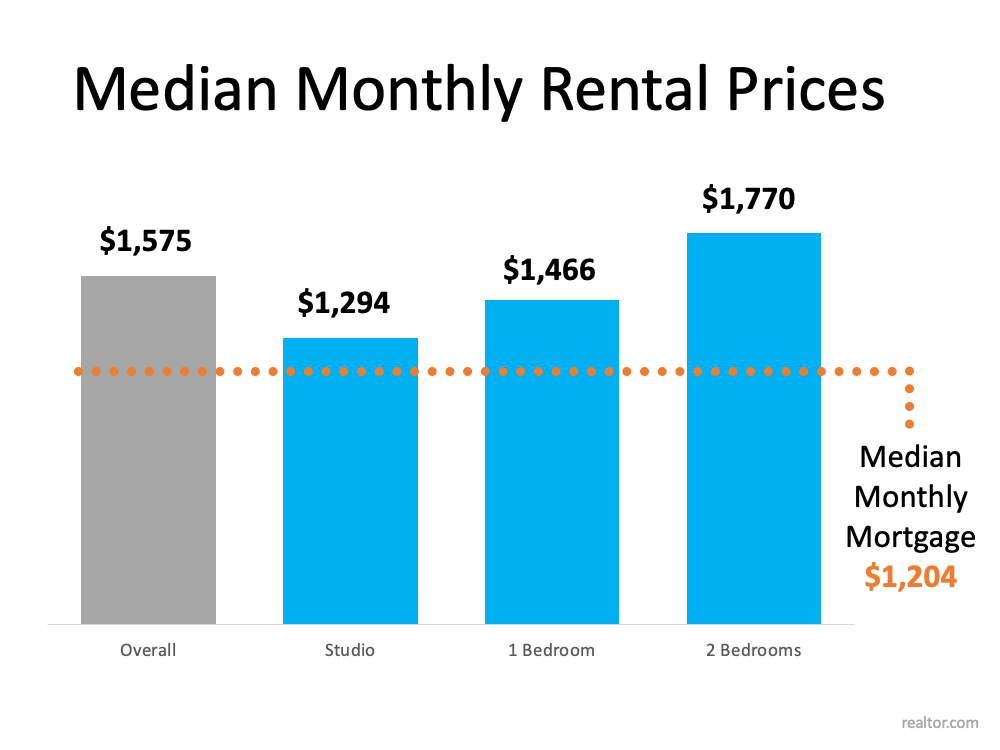
When you weigh your options of whether to buy a home or continue renting, how much you’ll pay each month is likely to be top of mind. According to the National Association of Realtors (NAR), monthly mortgage payments are rising, but they’re still significantly lower than the typical rental payment. NAR indicates the latest data on homes closed shows the median monthly mortgage payment is $1,204.

By contrast, the median national rent is $1,575 according to the most current data provided by realtor.comIn other words, buyers who recently purchased a home locked in a monthly payment that is, on average, $371 lower than what renters pay today (see graph below):With Rents on the Rise – Is Now the Time To Buy? | MyKCM

Rents Are Rising Sharply, and They Continue To Increase

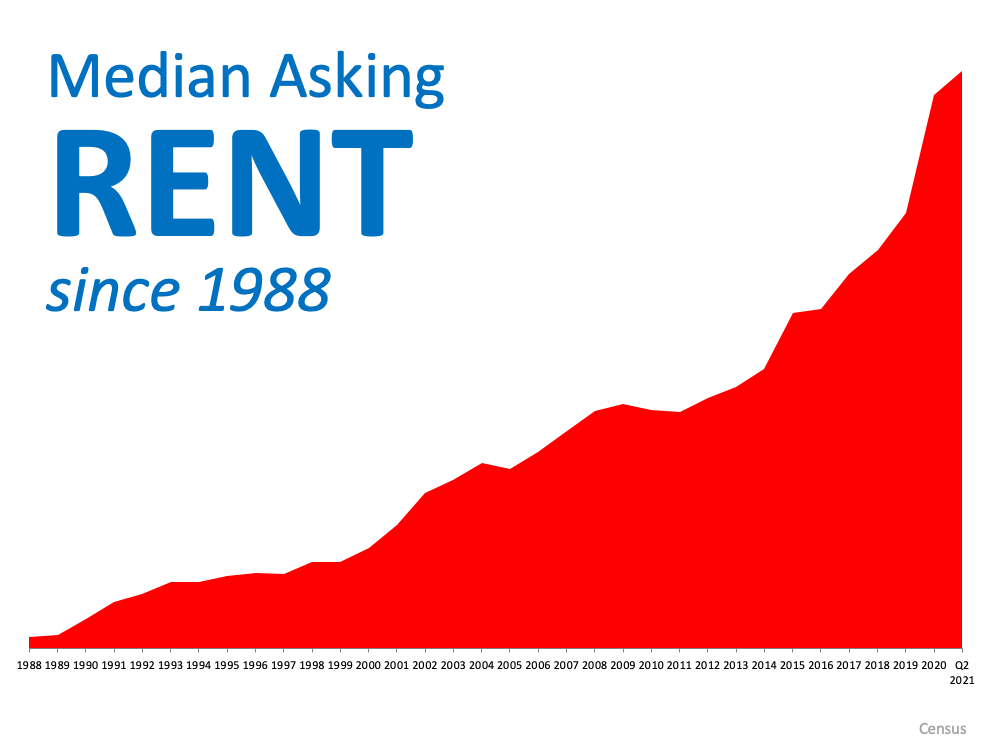
The difference in monthly housing costs when comparing renting and home buying today is significant, but many would-be homebuyers wonder about the future of rental prices. If we look to historical Census data as a reference, the median asking rent has risen consistently since 1988 (see graph below):With Rents on the Rise – Is Now the Time To Buy? | MyKCMThe rise in rent over time clearly shows one of the major advantages home ownership has over renting: stable housing costs. Renters face increasing costs every year. When you purchase your home, your mortgage rate is locked in for 30 years, meaning your monthly payment stays the same over time. That gives you welcome peace of mind and predictability for many years ahead.


Bottom Line

With rents continuing to rise across the country, renters should consider if now is the right time to buy. There are multiple benefits to buying sooner rather than later. Let’s discuss your options so you can make your most powerful decision.

Aug. 28, 2021

Real Estate: It’s Still a Lack of Supply, Not a Lack of Demand

Real Estate: It’s Still a Lack of Supply, Not a Lack of Demand | MyKCM

One of the major questions real estate experts are asking today is whether prospective homebuyers still believe purchasing a home makes sense. Some claim rapidly rising home prices are impacting demand and, by extension, leading to the recent slowdown in sales activity.

However, demand isn’t the real issue. Instead, it’s the lack of supply (homes available for sale). An article from the Wall Street Journal shows this is true for new home construction:

Home builders have sold more homes than they can build. Now they are limiting their sales in an effort to catch up.”

The article quotes David Auld, CEO of D.R. Horton Inc. (the largest homebuilder by volume in the United States since 2002), explaining how they don’t have enough homes for the number of buyers coming into their models:

“Through our history, to have somebody walk into our models and to tell them, ‘We don’t have a house for you to buy today’, is something that is foreign to us.”

Danielle Hale, Chief Economist for realtor.com, also explains that, in the existing home sale market, the slowdown in sales was a supply challenge, not a lack of demand. Responding to a recent uptick in listings coming to market, she notes:

“. . . if these changing inventory dynamics continue, we could see a wave of real estate activity heading into the latter part of the year.”

Again, the buyers are there. We just need houses to sell to them.

If the slowdown in sales was the result of demand waning, we would start to see home prices beginning to moderate – but this isn’t the case. As Mark Fleming, Chief Economist for First Americanexplains:

“There’s a lot of conversation around rising prices and falling quantity in the housing market, and there’s this concept, or this idea, that it's a demand-side problem . . . . But, if demand were falling dramatically, we would actually see less price pressure, less home price growth.”

Instead, we’re seeing price appreciation accelerate throughout this year, as evidenced by the year-over-year percentage increases reported by CoreLogic:

  • January: 10%
  • February: 10.4%
  • March: 11.3%
  • April: 13%
  • May: 15.4%
  • June: 17.2%

(July numbers are not yet available)

There’s a shortage of listings, not buyers, and there are three very good reasons for purchasers to still be interested in buying a home this year.

1. Affordability isn’t the challenge some are claiming it to be.

Though home prices have risen dramatically over the last 18 months, mortgage rates remain near historic lows. Because of these near-record rates, monthly mortgage payments are affordable for most buyers.

While homes are less affordable than they were last year, when we adjust for inflation, we can see they’re also more affordable than they were in the 1970s, 1980s, 1990s, and much of the 2000s.

2. Owning is a better long-term decision than renting.

recent study shows renting a home takes up a higher percentage of a household’s income than owning one. According to the analysis, here’s the percentage of income homebuyers and renters should expect to pay now versus at the end of the year.Real Estate: It’s Still a Lack of Supply, Not a Lack of Demand | MyKCMWhile the principal and interest of a monthly mortgage payment remain the same over the lifetime of the loan, rents increase almost every year.

3. Owners build their wealth. Renters build their landlord’s wealth.

Whether you’re a homeowner or an investor, real estate builds wealth through growing equity year-over-year. If you own, your household is gaining the benefit of that wealth accumulation. Fleming says:

The major financial advantage of homeownership is the accumulation of equity in the form of house price appreciation . . . . We have to take into account the fact that the shelter that you’re owning is an equity-generating or wealth-generating asset.”

Odeta Kushi, Deputy Chief Economist at First American, elaborates in a recent article:

“. . . once the home is purchased, appreciation helps build equity in the home, and becomes a benefit rather than a cost. When accounting for the appreciation benefit in our rent versus own analysis, it was cheaper to own in every one of the top 50 markets, including the two most expensive rental markets, San Francisco and San Jose, Calif.”

Today, that equity buildup is substantial. The National Association of Realtors (NAR) reports:

“The median sales price of single-family existing homes rose in 99% of measured metro areas in the second quarter of 2021 compared to one year ago, with double-digit price gains in 94% of markets.”

In 94% of markets, there was a greater than 10% increase in median price. That means if you bought a $400,000 home in one of those markets, your net worth increased by at least $40,000. If you rented, the landlord was the recipient of the wealth increase.

Bottom Line

For many reasons, housing demand is still extremely strong. What we need is more supply (house listings) to meet that demand.

Posted in Market News
Aug. 27, 2021

Top Landscape Plants for Fall

Aug 19, 2021


As the days are gradually getting shorter and the nights grow a little cooler, it’s a good time to start thinking about how you want to handle your fall landscaping. You may have never really put much thought into what your fall landscaping will look like; after all, many people see fall as a time to start prepping for winter and let the look of their landscaping kind of fall by the wayside until spring. With a little bit of TLC, though, you can transform your landscaping and create a striking contrast between spring and fall without having to break the bank or spend all your time working in the yard.


One easy way to do this is to add some new plants to your landscape as the season change approaches. There is a wide range of autumn-hardy plants in both flowering and ornamental varieties, so you should be able to find some options that you like regardless of your preferences.


Flowering Plants

While many people think of flowers as a big part of spring, many flowering plants absolutely flourish during autumn. Many of these flowering plants are available in a wide range of colors, and some are even perennial, so you’ll get to enjoy them year after year. Here are just a few of the fall flowers you might add to your landscaping:

  • Autumn Crocus
  • Blue Mist Shrub
  • Shasta Daisy
  • Aster
  • Chrysanthemum

Many summer-blooming plants also have varieties that bloom into early fall as well. There may be other options that are available locally on top of these, so be sure to check with your local nurseries to see if they have any recommendations for autumn-blooming flowers that do well in your area.


Ornamental Plants

Flowers are always a welcome addition to landscaping, but there’s something to be said for colorful and hardy ornamental plants as well. Some of these do well throughout the fall and even into the chill of winter, making them favorites when it comes to building up landscaping that will survive colder nights and chilly autumn winds. While this is far from an exhaustive list, here are a few ornamental plants that you might consider for your fall landscaping revamp:

  • Chinese Lantern
  • Cotoneaster
  • Ornamental Kale
  • Purple Fountain Grass
  • Winterberry Holly

Many plants that work well as ornamental pieces in the fall will also produce beautiful flowers in the spring or early summer, making them staples of your landscaping year-round. Some also produce fruits that local wildlife can enjoy as temperatures drop and they start preparing for the winter. In most cases, they can be planted either directly in the soil or in containers for an additionally striking look. As with flowering plants, be sure to check to see if there are additional options that grow well in your area and thrive in your climate zone.


Landscaping Redux

In addition to changing out the flowers in your yard, the fall can be a great time to make other changes to your landscaping as well. Everything from adding garden paths to installing outdoor lighting or planting and removing trees can be done as part of autumn revamp to your overall landscaping. This can be done alongside floral and ornamental planting to get the most out of your autumn, and by starting in late summer or early fall you can be sure that everything is in good shape before freezing temperatures or other problems arrive.


Aug. 26, 2021

More Young People Are Buying Homes


More Young People Are Buying Homes | MyKCM

There’s a common misconception that younger generations aren’t interested in homeownership. Many people point to the fact that millennials put off purchasing their first home as a reason for this belief.

Odeta Kushi, Deputy Chief Economist for First Americanexplains why millennials have put off certain milestones linked to homeownership. Those delays led to their homeownership rates trailing slightly behind older generations:

Historically, millennials have delayed the critical lifestyle choices often linked to buying a first home, including getting married and having children, in order to further their education. This is clear in cross-generational comparisons of homeownership rates which show millennials lagging their generational predecessors.”

So, it’s partially true that some millennials have waited on homeownership to focus on other things in their lives – and that’s impacting certain housing market trends.

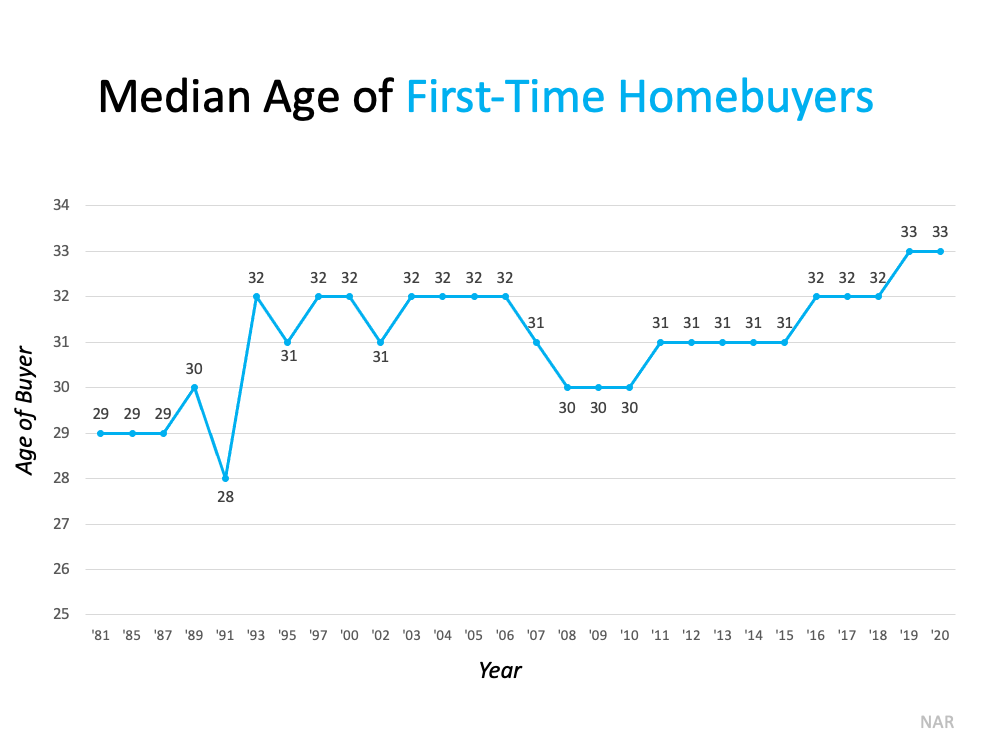
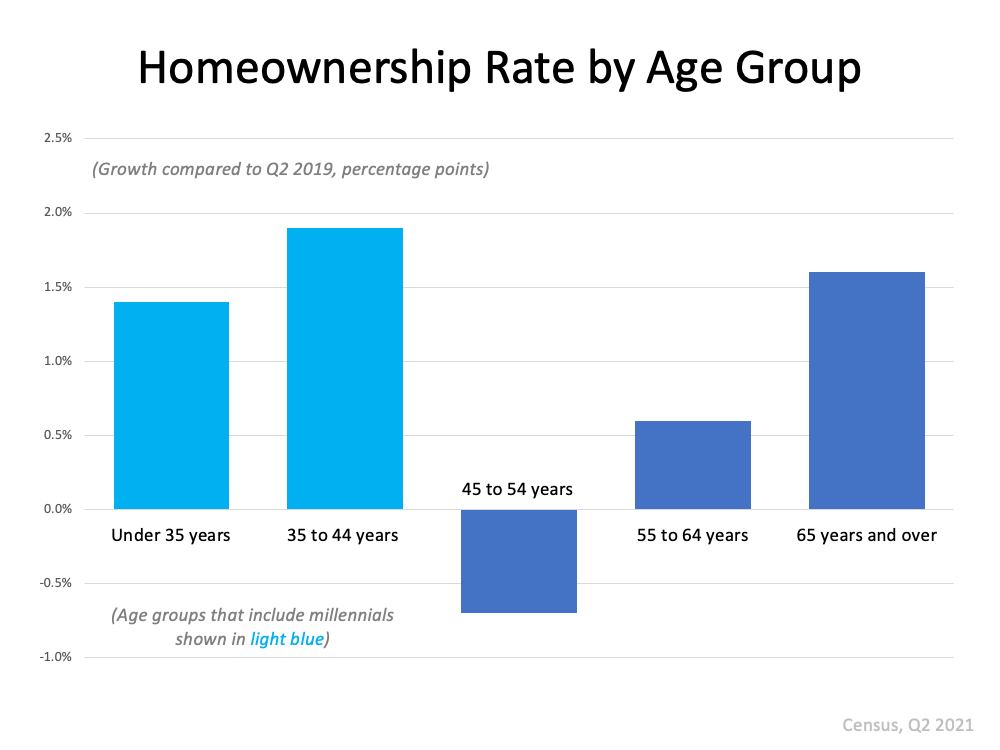
Data from the National Association of Realtors (NAR) indicates the average age of a first-time homebuyer is higher today than it’s been over the past 40 years. As the graph below shows, homebuyers today are purchasing their first home an average of 4 years later than people in the 1980s and early 1990s:More Young People Are Buying Homes | MyKCMBut just because millennials are hitting certain milestones later in life doesn’t mean they’re not interested in becoming homeowners. The recent U.S. Census reveals a significant increase in homeownership rates for millennials and other young homebuyers.More Young People Are Buying Homes | MyKCMAs the graph above shows, millennials are entering the market in full force, and their share of the market is growing. Based on the data, the belief that younger generations don’t want to buy homes is a misconception. In fact, the recent Capital Market Outlook report from Merrill-Lynch further drives home this point, as it specifically mentions the effect millennials are having on-demand:

“Demand is very strong because the biggest demographic cohort in history is moving through the household-formation and peak home-buying stages of its life cycle.”

Kushi is following the trend of millennial homeownership and puts it more simply, saying:

“. . . it’s clear that younger households (millennials!) are driving homeownership growth.”

As the largest generation, millennials’ impact on the market is growing as more and more people from that generation reach homebuying age – and Generation Z isn’t far behind, either. That means younger generations will likely continue to drive demand in the housing market for years to come.

Posted in Buying Tips
Aug. 25, 2021

Investigating Disaster Insurance


Homeowner’s insurance plays an important role in protecting your home and everything within it. With any luck you’ll never actually need it, but it provides a nice safety net in case the worst comes to pass. But did you know that there are some things that can happen to your home that aren’t covered by homeowner’s insurance?


If your home is damaged by a natural disaster such as a flood, earthquake, or tornado, you may find that your existing insurance policy doesn’t cover these natural events. In some cases, even man-made disasters may not be covered if the damage was caused by something like an explosion or a riot. Regardless of the cause, recovering after a disaster can be very expensive. To help protect against these costs in the event of a disaster, you usually have the option to purchase additional disaster insurance that gives you additional coverage beyond what your standard homeowner’s policy provides.


The Limits of Homeowner’s Coverage

Some homeowners believe that their existing policies cover everything that could happen to their homes, only to find out at the worst possible time that they aren’t actually covered. This usually is the result of an exceedingly rare occurrence such as flood damage, earthquake, or wildfire. Even insurance policies that claim to cover “all” damage typically make exclusions for a few types of disasters since those disasters aren’t localized to one specific property or home.

If you aren’t sure what sort of disaster coverage your existing insurance has, take a moment to review your policy or contact your insurance agent. Within your policy you should find the specifics of your coverage, as well as any exceptions that the policy doesn’t cover. If you want protection from those uncovered instances, you’ll need to pick up additional coverage.


How Disaster Coverage Works

Depending on your insurer and the type of disaster coverage you want to get, there are a few different ways that you could get this additional coverage. You may be able to buy blanket disaster coverage that covers multiple disaster types, though even it may have a few exceptions built in. If this isn’t available or if you want coverage for specific types of disasters, you may be able to buy single-disaster policies that only cover individual disaster types. Depending on your insurer and policy availability, your disaster coverage may be available as separate policies, or it may simply be an addition to your existing homeowner’s insurance.

Once you’ve taken out your disaster coverage, it will function similarly to your existing insurance. Should a disaster occur, your claim will be filed against your disaster policy or any disaster add-ons you’ve purchased instead of your standard homeowner’s insurance. Depending on the type of disaster and any other damage that may have occurred, there may also be claims made against your health insurance, vehicle insurance, or other insurance types; disaster insurance won’t replace or supersede any applicable insurance, it just helps to close gaps that previously didn’t have coverage.


Do You Need Disaster Insurance?

Whether you want to pay the additional costs of disaster insurance largely comes down to personal preference. By their nature most disasters are pretty rare, though some areas are more prone to disaster than others. The more likely it is that you could wind up in a disaster, the more beneficial disaster insurance would be to you, but keep in mind that disasters can still strike in locations where they aren’t common. It is also worth noting that if you live in an area where occasional disasters are likely (such as a flood plain that has a track record of heavy flooding during certain seasons) then you may not be able to get some types of disaster insurance or may have to pay higher premiums.

Aug. 24, 2021

Options for First-Time Homebuyers [INFOGRAPHIC]


Options for First-Time Homebuyers [INFOGRAPHIC] | MyKCM


Posted in Buying Tips
Aug. 23, 2021

What Do Experts Say About Today’s Mortgage Rates?

What Do Experts Say About Today’s Mortgage Rates? | MyKCM

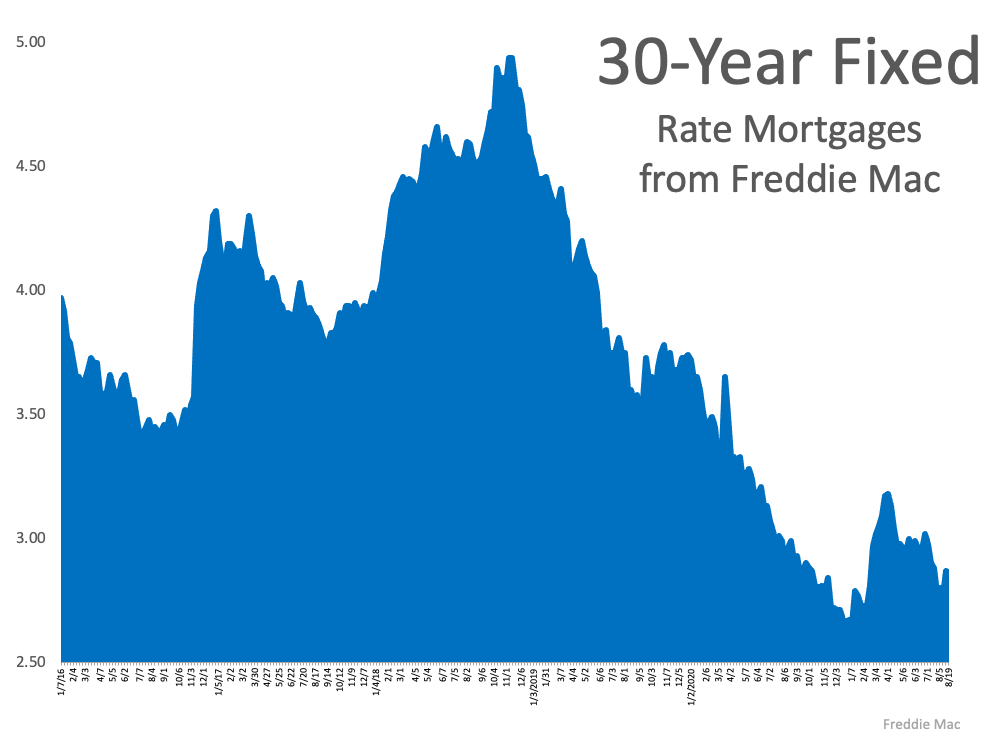
Mortgage rates are hovering near record lows, and that’s good news for today’s homebuyers. The graph below shows mortgage rates dating back to 2016 and where today falls by comparison.What Do Experts Say About Today’s Mortgage Rates? | MyKCMGenerally speaking, when rates are low, you can afford more homes for your money. That’s why experts across the industry agree – today’s low rates present buyers with an incredible opportunity. Here’s what they have to say:

Sam Khater, Chief Economist at Freddie Macpoints out the historic nature of today’s rates:

“As the economy works to get back to its pre-pandemic self, and the fight against COVID-19 variants unfolds, owners and buyers continue to benefit from some of the lowest mortgage rates of all-time.”

Mark Fleming, Chief Economist at First Americantalks about how rates impact a buyer’s bottom line:

“Mortgage rates are generally the same across the country, so a decline in mortgage rates boosts affordability equally in each market.”

Danielle Hale, Chief Economist at realtor.com, also notes the significance of today’s low rates and urges buyers to carefully consider their timing:

Those who haven’t yet taken advantage of low rates to buy a home or refinance still have the opportunity to do so this summer.”

Hale goes on to say that buyers who don’t act soon could see higher rates in the coming months, negatively impacting their purchasing power:

“We expect mortgage rates to fluctuate near historic lows through the summer before beginning to climb this fall.”

And while mortgage rates are still low today, the data from Freddie Mac indicates rates are fluctuating ever so slightly right now, as they moved up one week before inching slightly back down in their latest release. It’s important to keep in mind the influence rates have on your monthly mortgage payment.

Even small increases can have a big impact on what you pay each month. Trust the experts. Today’s rates give you the opportunity and flexibility in what you can afford. Don’t wait on the sidelines and hope for a better rate to come along; the rates we’re seeing today are worth capitalizing on.

Bottom Line

Mortgage rates hover near record lows today, but experts forecast they’ll rise in the coming months. Waiting could prove costly when that happens. Let’s connect today to discuss today’s rates and determine if now’s the time for you to buy.


Posted in Buying Tips