Area Real Estate News & Market Trends

You’ll find our blog to be a wealth of information, covering everything from local market statistics and home values to community happenings. That’s because we care about the community and want to help you find your place in it. Please reach out if you have any questions at all. We’d love to talk with you!

April 27, 2021

This Isn’t a Bubble. It’s Simply Lack of Supply. [INFOGRAPHIC]

This Isn’t a Bubble. It’s Simply Lack of Supply. [INFOGRAPHIC] | MyKCM

Some Highlights

  • In a recent article, Lawrence Yun, Chief Economist for the National Association of Realtors (NAR), discussed the state of today’s housing market.
  • When addressing whether or not today’s high buyer competition and rising home prices are evidence of a housing bubble, Yun said that this “is not a bubble. It is simply lack of supply.”
  • Today’s housing market is healthy, and rising prices are driven by real buyer demand. Let’s connect to talk about the best ways to navigate such an energetic market.
Posted in Market News
April 23, 2021

Why This Is a Great Year to Sell Your Vacation Home

Why This Is a Great Year to Sell Your Vacation Home | MyKCM

As vaccines are administered and travel resumes, many of us are beginning to plan for those long-awaited vacations we missed out on over the past year. Some households are focusing their efforts on buying a vacation home rather than staying in a hotel, too. The National Association of Home Builders (NAHB) reports:

Second homes (i.e., homes sold to buyers who are not going to occupy the home year-round, but use it as a vacation home, investment property, etc.) account for 15 percent of new single-family home sales.”

It’s not surprising that there’s an increase in demand for vacation homes. The majority of Americans are realizing they prefer to be around small groups, as shown in a recent survey from The Harris Poll:

“Social distancing taught consumers new things about how they like to socialize; (75%) said, ‘during COVID social distancing I realized I preferred smaller social gatherings at home or at friends’ place.’”

Not only are vacation homes seen as a potentially more pandemic-friendly way to travel and socialize, but they can also serve as an extended home-away-from-home. With more Americans being given the option to continue working remotely or retire earlier than expected, vacation homes can be used year-round. The NAHB explains:

“Remote work arrangements have made it possible for some wealthier Americans to move to alternate locations that are not just small, suburban shifts from within their current metro area.  More fundamentally, second home demand may also be benefitting by an acceleration of retirement plans, as well as stock market gains.”

Bottom Line

The demand for vacation homes has increased and will continue to rise as we head into summer. If you own a house in a destination area and have thought about selling, now is a great time to take advantage of today’s high buyer interest. Let’s connect to discuss your opportunities in our local market.

Posted in Market News
April 22, 2021

Take the No-Waste Challenge

American writer and environmental activist Wendell Berry once said, “Earth is what we all have in common.” And it’s true. For the time being, at least, Earth is the only planet we have, and keeping it beautiful starts with individuals.

According to most recent figures obtained by the Environmental Protection Agency (EPA), each American, on average, produces about 4.9 pounds of trash each day, which adds up to a little over 292 million tons of trash per year. Everyday life can get messy, and it’s understandable for some trash to pile up. However, if you’re looking to make an impact by reducing the amount of waste you create, there are plenty of ways to do it.

This guide outlines some of the easiest solutions for cutting back on waste and offers tips for implementing a “less is more” outlook in your life. And be sure to take the quiz that follows to find out your wastefulness rating!


Tread Lightly

Just like the footprint you leave when walking barefoot in the sand, every action you take makes a metaphorical footprint on the planet—and it’s not just buying plastic water bottles or neglecting to recycle that has an impact. Simple, everyday behaviors you may not think twice about, like leaving the water running when brushing your teeth or forgetting to turn the lights off when you leave a room, can make a negative environmental impact.

When You're Home

clear containers beans grains

    •  The kitchen may be the first place you think of when trying to reduce the amount of waste you create, and you’d be right: it’s a great place to start! Take a look at your pantry and cabinets. How many items are prepackaged? Is there anything you could have purchased without the box, container, or bag? Things like rice, beans, grains, and cereals can be bought in bulk and placed in reusable, airtight containers, saving plastic and money.

    •  Prevent your trashcan from filling up quickly (and getting smelly) by composting natural food scraps (e.g., banana peels, coffee grounds, and unused fruit and veggie bits). If you don’t want to spend time creating a compost bin from scratch, there are now a handful of models you can purchase online that do the work for you. If you have a garden or flower beds, be sure to utilize any compost you generate to help plants and flowers grow.

    •  If you or your kids have a bad habit of forgetting to turn lights off when leaving a room, consider setting the lights throughout your home on a timer or investing in an Amazon Echo, which can help you turn nearly all your electronics (not just lights) on and off from any room in the house.

While You Work

woman teleconference call

      •  If you’re still working from home, then chances are you’re using a lot more electricity in your office than in years past. If your workspace gets plenty of natural sunlight, consider opening the blinds or curtains on nice days and turning off your desk or overhead lights.

      •  At the end of the day, remember to shut down your computer and unplug it so you aren’t using power unnecessarily. You can also unplug desk lamps, space heaters, fans, shredders, and any other electric devices while not in use.

      •  If you only keep one recycling bin in your home (and it’s not in your office), it can be easy to forget the process of separating your trash and recycling throughout the work day. Consider purchasing a separate small bin for things like scrap paper and other recyclables, or pile discarded papers into boxes you can recycle later.

      •  Almost every working adult who buys coffee out is guilty of tossing a plastic or paper coffee cup into the trash without a second thought. However, think about how many times you do that in a month and … yikes. Invest in a high-quality, at-home coffee maker, instead, or bring a reusable tumbler or cup the next time you visit the coffee shop.

When You Shop

woman cloth shopping bag

        •  If you already bring reusable bags to the grocery store, take your game up a notch by bringing reusable produce bags instead of using the thin plastic bags the store provides. And if you don’t already have reusable bags, consider purchasing some. Most grocers have them at the store, they typically don’t cost more than a few dollars, and some stores even offer discounts at checkout to shoppers who use them.

        •  While grocery stores are the most common places to bring reusable bags, who says you can’t bring them while you run other errands? Keep a few bags in your car at all times so you can make sure you have them for trips to the pharmacy, hardware store, and even clothing stores.

        •  Shopping locally is one of the best ways to help reduce waste on a national, and even global, scale. When you buy goods from local businesses, you are helping to reduce the amount of transportation (and therefore fossil fuels) required to get that product to you. And, just as important, you’re helping small businesses!

        •  Many large online retailers, including Target and Walmart, now sometimes ask if you would like to postpone the shipping for some of the items you ordered so that they may be shipped together. This helps save transportation costs for the company, reduces waste, and can even help you save—as the companies sometimes offer discounted shipping for selecting this option.


As you can see, reducing the amount of waste you produce on a daily basis doesn’t have to be a complicated process full of compromises. It’s as simple as changing your mindset and incorporating simple, eco-friendly behaviors, one small step at a time.

Share these eco-friendly ideas with friends and family.

Posted in DFW Lifestyles
April 21, 2021

Some Buyers Prefer Smaller Homes

Some Buyers Prefer Smaller Homes | MyKCM

Over the past year, we’ve had plenty of opportunities to reflect on what we consider most important in our lives. The place we call home is one of the biggest things many of us are reevaluating. George Ratiu, Senior Economist at realtor.com, shares:

“The very nature of the pandemic, through the health implications, social distancing, and need to isolate, has really brought a central focus on the importance of home for most Americans…In a sense, it has elevated real estate markets as a centerpiece of our lives.”

For some, this has spurred an interest in making a move to a home that better suits our changing needs. In a recent study on today’s homebuyer preferences, the National Association of Home Builders (NAHB) states:

“When asked more specifically how the pandemic may have impacted their preference for home size21% or about 1 out of every 5 buyers, do want a larger home now as a direct result of the health crisis, while another segment – 12% – would prefer a smaller one instead.”

While you might expect more time at home to lead to a need for more space, it’s interesting that a significant portion of homeowners actually want less. For those who own larger homes right now and have a desire to move, today’s housing market is full of opportunities. Danielle Hale, Chief Economist at realtor.comexplains:

“In a real estate market that is tipped in the favor of sellers, boomers and older homeowners are really the ones holding the cards…Those who are selling homes can use the profits to help them buy new ones.”

As a homeowner today, you likely have equity that can be put toward the purchase of your next home. With the equity growth homes have seen over the past year, you may have more than you think, which can help significantly as you make a move into your next home. According to a report from the National Association of Realtors (NAR):

“Home sellers cited that they sold their homes for a median of $66,000 more than they purchased it. Sellers 22 to 30 years gained the least at $33,400 in equity compared to sellers 66 to 74 years gained $100,000 in equity as they likely had lived in their homes for a longer period of time.”

Despite the benefits of growing home equity, some homeowners are still hesitant to move and could be considering remodeling or making changes to their current space instead. However, if you’ve thought about aging in place rather than downsizing, you may want to reconsider. The U.S. Census Bureau points out:

Of the nation’s 115 million housing units, only 10% are ready to accommodate older populations.”

If your house is no longer the best fit for your evolving needs, it may be time to put your equity to work for you and downsize to the home you really want.

Bottom Line

Today’s housing market favors homeowners who are ready to sell their houses and make a move. If you’re thinking about downsizing this year, let’s connect to discuss your options in our local market.

Posted in Market Updates
April 20, 2021

Outdoor Structures Make Your Yard More Fun!

Although it’s barely spring, summer is right around the corner. And nothing says summer like better outdoor spaces to play and work in! Now is the time to plan and install outdoor structures so you can spend the hottest days of the year taking advantage of the breeze and shade, while still being able to spend time in the great outdoors.


A Short List of Outdoor Structures

Outdoor structures offer endless possibilities when it comes to sizes, shapes, construction materials, and intended uses. However, there are a few that are hardcore backyard staples, to the point that some might argue a home is completely bare without them. Of course, the outdoor structures you choose will depend greatly on how you use your home, but here’s a short list to get you started.

  • Patio covers. Already have a patio, but the sun’s putting the kibosh on your outdoor plans? It’s time for a patio cover. These very simple structures are essentially a roof for your patio, designed to seamlessly marry with your existing rooflines and structures. If a permanent roof isn’t possible, consider adding a shade sail, which can provide a great deal of shade with very little cost or maintenance.
  • Pergolas and trellises. Looking for a fancy place to run some plants for natural shade with the added benefit of flowers, fruits, or foliage? Pergolas and trellises provide spaces for plants to climb, as well as providing broken shade throughout the day. The tighter the construction, the more shade you’ll have, but if you plan to train vines on your structure, leave ample room for growth.
  • Decks. Of course, not all the best structures are aerial. There’s absolutely nothing like a nice deck. You get all the benefits of sitting outside without all the mud, grass, and bugs. What’s not to like? Decks allow for a lot of creativity and customization, too, with common add-ons like benches, fancy railings, and multiple levels to create even more interest.
  • Screen porches. If you already have a deck or a patio that you like, and a roof on it, you can easily convert it to a screen porch with a few weekends’ worth of effort. With a screen porch, you can still enjoy the great outdoors, but without having to worry about stinging insects or debris that may be blowing on the wind.
  • Gazebos. Looking for a freestanding structure away from your house? A gazebo or shelter may be a good choice. These largely open buildings feature a floor and a roof, and not a lot else, making them ideal for shady spots or poolside buildings. Hang a hammock inside and you’ve got the ideal summer relaxation spot.
  • Recreational sheds. By now, most of us have heard of the “she shed,” but freestanding recreational sheds can be hideouts for anyone. Not a garage and not a house, a freestanding shed is a structure that allows you to create any kind of year-round space you can imagine. Add electricity and a heater, and even winter’s chill is no match for your outdoor studio space or reading room.
  • Greenhouses. If you’ve got a green thumb, a greenhouse may be the perfect addition to your garden space. Even a small greenhouse structure will give you more room for plant-based experiments and somewhere to house your sensitive plants through the cold of the winter. Be sure to choose a model with excellent ventilation!
Posted in Home Staging Tips
April 19, 2021

93% of Americans Believe a Home Is a Better Investment Than Stocks

93% of Americans Believe a Home Is a Better Investment Than Stocks | MyKCM

A recent Survey of Consumer Finances study released by the Federal Reserve reveals the net worth of homeowners is forty times greater than that of renters. If you’re wondering if homeownership is a good investment, the study clearly answers that question, and the answer is yes.

Do Americans believe a home is a better investment than stocks?

In a post on the Liberty Street Economics blog, the Federal Reserve Bank of New York notes that 93.3% of Americans believe buying a home is definitely or probably a better investment than buying stocks.

Here’s how the results break down:93% of Americans Believe a Home Is a Better Investment Than Stocks | MyKCMThe survey also shows a wide range of reasons why Americans feel that way (respondents were able to pick more than one answer):93% of Americans Believe a Home Is a Better Investment Than Stocks | MyKCM

Bottom Line

The data show how strongly Americans believe in homeownership as an investment. That belief is warranted. The Liberty Street Economics blog put it best by saying:

“Housing represents the largest asset owned by most households and is a major means of wealth accumulation, particularly for the middle class.”

Posted in Market Updates
April 16, 2021

Is This the Year to Repaint Your Home?


There’s nothing like a postcard-fresh paint job on your home to make it look and feel brand new again, but it’s unlikely you’ll need a new coat of paint every year. So how do you know when it’s time to repaint? Let’s walk through some of the biggest signs that it’s time to break out the buckets and brushes.


The Purpose of Paint

Although paint is nice to look at, and the color you choose definitely tells a story and lends a mood to the whole neighborhood, paint serves another very important function as a waterproof barrier. For many homes, especially those that are older, there’s very little standing between the siding and the living space. This is why having good paint really matters. Paint waterproofs that siding, and helps prevent moisture from crossing from the outdoors inward. This, in turn, helps slow the damage time brings, like wood rot and damage from insects drawn to a moist environment. So even though it’s a lovely thing to look at, paint is really one of your best defenses against the elements.

Painting isn’t limited to wooden siding, though. You can also paint many types of siding considered non-paintable with the right kind of preparation and primer. So, if your house is covered in a horrific color of vinyl siding, for example, all hope is not lost.

How to Tell It’s Time to Paint

Knowing when it’s time to paint your house is as much an art as a science. There are definitely things you can look for that indicate the time is coming near, but you’ll also need to balance that with the expense and effort involved. Here are a few clear indicators to watch:

  • There’s chipping paint. Most people know that chipping paint is a sign it’s probably about time to start considering a paint job. But there’s a fine line between a little bit of acceptable flaking and serious chipping. If you’re only noticing a few very small flakes falling off here and there, you should be working on picking a new color, but you don’t necessarily need to stop everything to get to painting. On the other hand, if big chips of paint are shedding off in multiple places, you’ve probably waited too long.
  • Your waterproofing is failing. If your paint no longer keeps water from soaking into your siding, and instead it seems to be absorbing more water, your waterproofing has failed. Generally, you want water to bead up on your siding, then work its way down and onto the ground. If the paint is so far gone that your siding is soaking up rainwater, a paint job is needed ASAP. Waiting risks further, more serious damage.
  • There’s damage. Visible siding damage is a good sign it’s time to paint. After all, after you’ve fixed the holes in the siding created by woodpeckers, or by falling trees during storms, you’ll want to ensure the paint matches. Sometimes you can get away with just painting that side of the house, but large patches or siding replacements will usually not match existing paint, even if you use the same bucket. UV light breaks down the pigments quickly; just how quickly depends on the colors you’ve chosen.
  • You’re ready for a change. Look, you can paint your house just because you hate the color. It’s totally legit and, frankly, can be a much easier process than painting to deal with damage or worn-out paint. Just make sure you’re preparing the surface just like you would for a coat of paint meant to be a repair so it’ll adhere properly.
Posted in Home Keppr
April 15, 2021

Homeownership Is Full of Financial Benefits

Homeownership Is Full of Financial Benefits

Homeownership Is Full of Financial Benefits | MyKCM

Fannie Mae survey recently revealed some of the most highly-rated benefits of homeownership, which continue to be key drivers in today’s power-packed housing market. Here are the top four financial benefits of owning a home according to consumer respondents:

  • 88% - a better chance of saving for retirement
  • 87% - the best investment plan
  • 85% - the chance to be better off financially
  • 85% - the chance to build up wealth

Additional financial advantages of homeownership included in the survey are having the best overall tax situation and being able to live within your budget.

Does homeownership actually give you a better chance to build wealth?

No one can question a person’s unique feelings about the importance of homeownership. However, it’s fair to ask if the numbers justify homeownership as a financial asset.

Last fall, the Federal Reserve released the Survey of Consumer Finances, a report done every three years, with the latest edition covering through 2019. Their findings confirmed that homeownership is a clear financial benefit. The survey found that homeowners have forty times higher net worth than renters ($255,000 for homeowners compared to $6,300 for renters).

The difference in net worth between homeowners and renters has continued to grow. Here’s a graph showing the results of the last four Fed surveys:Homeownership Is Full of Financial Benefits | MyKCMThe above graph only includes data through 2019, but according to CoreLogic, the equity held by homeowners grew by $26,300 over the last twelve months alone. That means the gap between the net worth of homeowners and renters has probably widened even further over the last year.

Some might argue the difference in net worth may be due to homeowners normally having larger incomes than renters and therefore the ability to save more money. However, a study by First American shows homeowners have greater net worth than renters regardless of their income level. Here are the findings:Homeownership Is Full of Financial Benefits | MyKCMOthers may think homeowners are older and that’s why they have a greater net worth. However, a Joint Center for Housing Studies of Harvard University report on homeowners and renters over the age of 65 reveals:

“The ability to build equity puts homeowners far ahead of renters in terms of household wealth…the median owner age 65 and over had home equity of $143,500 and net wealth of $319,200. By comparison, the net wealth of the same-age renter was just $6,700.”

Homeowners 65 and older have 47.6 times greater net worth than renters.

Bottom Line

The idea of homeownership as a direct way to build your net worth has met the test of time. Let’s connect if you’re ready to take steps toward becoming a homeowner.

Posted in Market Updates
April 14, 2021

The In-Law Suite Life

At first glance, multigenerational living arrangements may seem unusual, but they were once the rule, not the exception. In mid- to late-nineteenth-century America, the majority of elderly parents and grandparents lived with their children. By the twentieth century, this trend steadily declined, hitting a low of about 12 percent of the population in 1980, per Pew Research.

What’s old is new again, however—multigenerational living is a booming home trend. In sheer numbers, the sixty-four million Americans living in such homes (which is 20 percent of the country) as of 2016 are the most ever in US history, making in-law suites a desirable home renovation in many ways for you, your family, and potential future buyers.

Digging Deeper

grandmother and granddaughter using device

What exactly does multigenerational mean? It can have a variety of definitions depending on who you ask, but the US Census defines multigenerational as three or more generations living at a residence. This is usually grandparents, their kids, and their grandkids.

Why people opt for this living arrangement is a bit more complex. Sometimes, an elderly parent is alone and can no longer take care of herself, so she moves in with her child’s family for companionship and care. At other times, it can be a financial choice: for example, cohabitating can be a much more cost-effective option than a nursing home. In addition, more and more twentysomethings are opting to live with or move back in with their parents to focus on their careers or save money.

The benefits are tangible. Grandparents get to see their grandkids daily and vice versa, leading to more family bonding—and possibly for the former, less loneliness and more security. Parents potentially have a live-in babysitter. Finances or chores can be shared. More family members visit who normally wouldn’t.

Multiple Generations, Multiple Needs
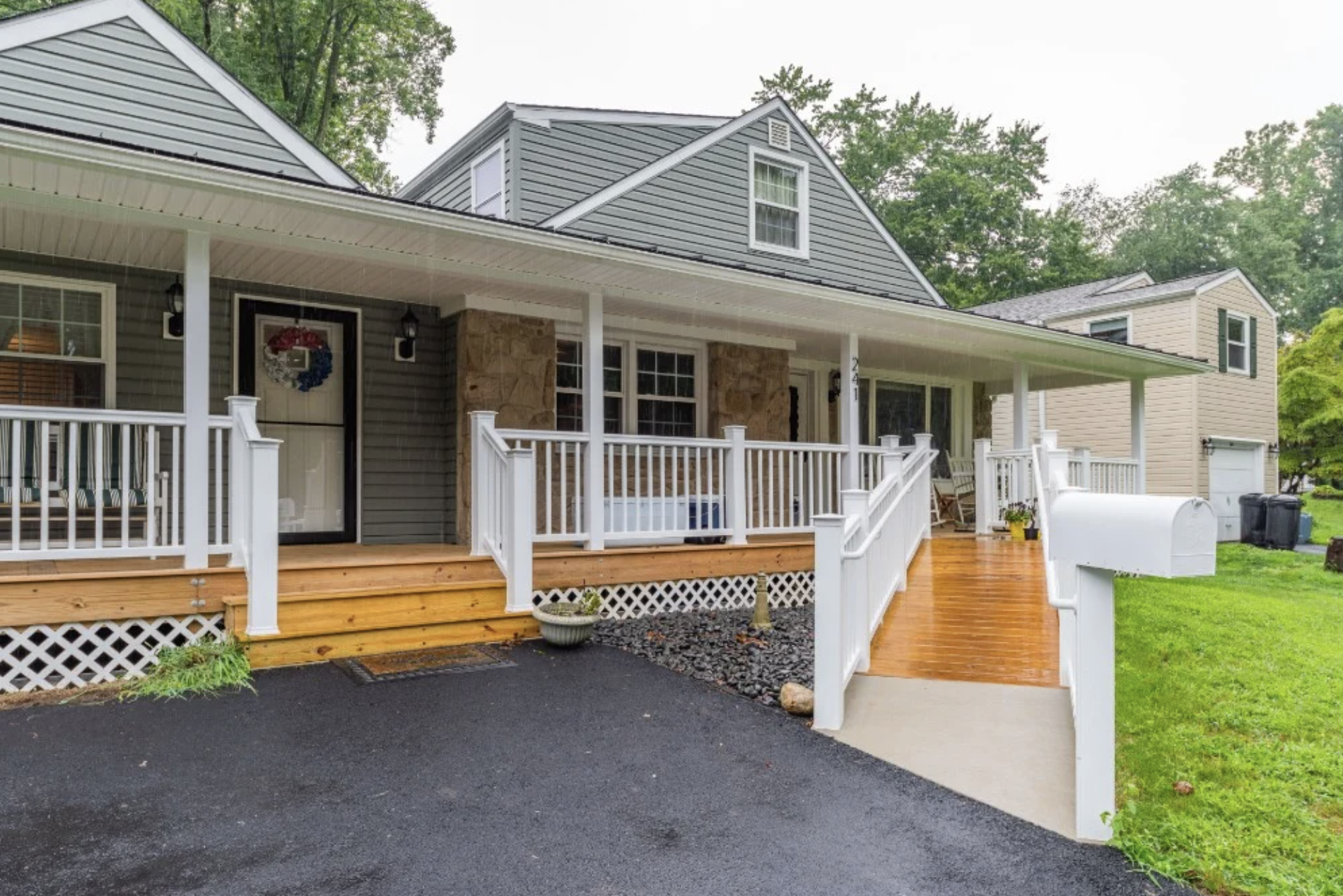
#

Photo Credit: Tilghman Builders

Of course, such living conditions often require adjustments, both from the families and to the houses themselves—especially when it comes to creating an in-law suite. The existing home needs to be renovated or expanded in order to give the new resident(s) adequate space, comfort, and privacy while also not disrupting the lives of those currently living there.

What are the most sought-after features? “A kitchen is a must, and a bathroom and laundry room are important as well,” says Eric Tilghman, operations manager and former lead carpenter for Tilghman Builders in Churchville, Pennsylvania. He adds, “For older family members, ADA compliance is definitely something that needs to be discussed for in-law suites, particularly for something like a bath.”

As you can tell, all these necessities point to one thing: independence. It’s vital for older family members to feel like they can do things themselves with as little help as possible from others.

That extends to the exterior of the house as well, according to Tilghman. “A private entrance is helpful,” he notes. “It's nice to include some sort of an outdoor option as well, like a covered patio or, as we did with one project, a cantilevered balcony off the back that overlooked the backyard where the grandkids played. We even had a project a few years ago where we ended up with two front doors on the front of the house, at different levels. These considerations definitely help the person that's going to be occupying the space feel like it’s their own.”

Consult a Professional

For all the positives of expanding your home, there are also some relatively common obstacles to overcome.

#

        • COMPLIANCE
          In addition to ensuring that your project meets ADA standards for older Americans, you’ll need to get zoning and variance permission from your township for any in-law suite addition, which can make the desired outcomes tricky. Tilghman offers the two-front-door home again as an example of this: the zoning board was concerned that the unique design would become trendy.

        • SEAMLESSNESS
          In-law suites are often added to older homes, upward of fifty to one hundred years old. As you can imagine, making the new addition look like it’s always been there—as is usually the goal—can be challenging, but most builders should be able to achieve it. “We go to great lengths to stay true to the characteristics of the house,” Tilghman says. “Those are always important details for us.”

        • WHO’S THE BOSS?
          When asked about the most challenging part of an in-law suite project, Tilghman is quick to reply. “It feels like you have two different customers,” he says. “Say we have grandpop, who’s paying for his in-law suite, and he's putting it on his son's house. So when I have a question about, say, a cabinet color, I need to listen to grandpop, but the son may have an opinion as well. That is challenging every single time. So we really try to simplify things and mention that we’re asking questions or reviewing options to eliminate regrets later.”

          To prevent this problem before it even begins, keep an open dialogue from the start. The parties involved need to sit down and establish ground rules for everything, from big issues (such as finances or boundaries) to small ones (such as colors or who gets keys to which doors) from the outset.

        • KEEP YOUR EYE ON ROI
          And, finally, there’s the cost. As you can imagine, an in-law suite project can get rather pricey, depending on where you live, the size, and the amenities—it can cost $125,000 or more for a typical 500- to 1,000-square-foot addition. That said, you can lower the cost significantly by renovating an existing space, such as a basement or a garage, or by choosing fewer high-end materials for things like flooring.

          In addition, if you focus on the long term, you can definitely reap the financial benefits. If you decide to sell someday, your house will be more attractive to buyers because of the added square footage, whether the buyer makes use of the space as part of the house, as an in-law suite, or even as a rental property.

          Granted, multigenerational living isn’t for everyone, and it does require an adjustment period for all involved. However, if you do choose to have such a home arrangement, it’s easy to bask in the positives, including more time together as a family, a possible at-home babysitter for parents, money-saving possibilities, and a good return on investment. The best benefit of all? You’re opening up your home for a loved one when he or she needs it the most.

Share the benefits of generations living under one roof with friends and family.

Posted in Market Updates
April 13, 2021

When Should You Get Your A/C Ready for Summer?

It may still be just barely spring, but summer is right around the corner. For a lot of homeowners, that means flipping the heat to air conditioning, and, potentially, discovering that their air conditioner isn’t working properly. This is why it’s so important to check your air conditioning system now, before you really need it. Not only will you be able to beat the rush for repairs, you’ll also get extra time to clean and prep your unit so it can perform at its very best all summer long. So when – and how – should you get that A/C ready for summer?


Now Is The Time for A/C Prepping

You can run a simple check on your air conditioner any time the weather is above about 50 degrees or so. You don’t need to leave it on all day, just long enough to make sure it’s blowing cold and there aren’t any weird noises or smells coming out of the outdoor unit. If you try this when it’s too cold outside, some units will freeze up, others may simply refuse to kick on at all, and both of these situations may lead to your calling out a repairman for absolutely no reason. But it’s also important to not wait too long to check your unit for problems, since HVAC experts get booked pretty solid as soon as it starts to heat up. Unless you really love waiting for service, check your unit when the days start to warm, but aren’t unbearably hot. You should be able to find someone to make a repair in a reasonable time if you beat the rush.

How to Prepare Your Air Conditioner for Summer

Although much of what it takes to repair an air conditioner unit requires a licensed expert, there are plenty of things a homeowner can do on their own to get their system ready. Don’t ever take covers off of HVAC equipment without specific training, but here are some things you can do right now:

  • Trim the weeds. Weeds growing into and close to your outside air conditioner unit can interrupt the air flow that makes it possible for your unit to work efficiently. With the breaker turned off, remove any vines that have climbed inside, trim any weeds growing around the unit, and take advantage of this time to spray the weeds within a foot of the unit with a hearty weedkiller.
  • Rinse the condenser unit. The condenser is that unit that sits outside and hums along during the summer. If you look closely, you can see that the main part of the equipment is a huge bank of tiny metal fins set inside a metal cage. These fins are how the condenser removes heat from inside your home, so it’s really important to keep them clean and exposed to the open air. It’s an easy process to clean them, though it can be time consuming. Simply hose the entire unit down, both inside and out, until the water running out of the unit no longer has dirt or grit in it.
  • Check your condensation line. Another pain point for air conditioners can be the condensation line. Even though you may use this when your heater is running, a great deal more humidity is removed from room air during the warmer seasons, so a problem may not be glaringly obvious through the winter. You’ll find an access at or near your furnace that will allow you to run a little bit of vinegar or bleach through the line to destroy algae and mildew that can block up the works.
  • Clean your filters. You should be cleaning or replacing your filters at least once every three months, but sometimes those things slip a bit during the winter. Now is the time to get back into better habits. Check your filter and if there’s any discoloration or visible dirt, clean or discard it, depending on the type you have. Repeat this monthly through the end of the summer for optimal air flow to your unit.
Posted in Home Maintenance