
Area Real Estate News & Market Trends

You’ll find our blog to be a wealth of information, covering everything from local market statistics and home values to community happenings. That’s because we care about the community and want to help you find your place in it. Please reach out if you have any questions at all. We’d love to talk with you!

April 13, 2021

Don’t Sell on Your Own Just Because It’s a Sellers’ Market

Don’t Sell on Your Own Just Because It’s a Sellers’ Market | MyKCM

In a sellers’ market, some homeowners might be tempted to try to sell their house on their own (known as For Sale By Owner, or FSBO) instead of working with a trusted real estate professional. When the inventory of homes for sale is as low as it is today, buyers are eager to snatch up virtually any house that comes to market. This makes it even more tempting to FSBO. As a result, some sellers think selling their house will be a breeze and see today’s market as an opportunity to FSBO. Let’s unpack why that’s a big mistake and may actually cost you more in the long run.

According to the Profile of Home Buyers and Sellers published by the National Association of Realtors (NAR), 41% of homeowners who tried to sell their house as a FSBO did so to avoid paying a commission or fee. In reality, even in a sellers’ market, selling on your own likely means you’ll net a lower profit than when you sell with the help of an agent.

The NAR report explains:

FSBOs typically sell for less than the selling price of other homes; FSBO homes sold at a median of $217,900 in 2020 (up from $200,000 in 2019), and still far lower than the median selling price of all homes at $242,300. Agent-assisted homes sold for a median of $295,000...Sellers who began as a FSBO, then ended up working with an agent, received 98 percent of the asking price, but had to reduce their price the most before arriving at a final listing price.”

When the seller knew the buyer, that amount was even lower, coming in at $176,700 (See graph below):Don’t Sell on Your Own Just Because It’s a Sellers’ Market | MyKCMThat’s a lot of money to risk losing when you FSBO – far more than what you’d save on commission or other fees. Despite the advantages sellers have in today’s market, it’s still crucial to have the support of an expert to guide you through the process. Real estate professionals are trained negotiators with a ton of housing market insights that average homeowners may never have. An agent’s expertise can alleviate much of the stress of selling your house and help you close the best possible deal when you do.

Bottom Line

If you’re ready to sell your house this year and you’re considering doing so on your own, be sure to think through that decision carefully. Odds are, you stand to gain the most by working with a knowledgeable and experienced real estate agent. Let’s connect to discuss how a trusted advisor can help you, especially in today’s market.

Posted in Selling Tips
April 9, 2021

3D-Printing: The Future of Homebuilding with ICON

Founded in 2017, ICON is one example of what the future of home building looks like—all made possible by 3D-printing technology and ambitious dreams. Co-founder and CEO Jason Ballard discusses how such a home is printed and what truly keeps the ICON team motivated.
#Describe what the beginning of ICON looked like:

The initial project aimed to create the first permitted 3D-printed house alongside our nonprofit partner, New Story, an organization aiming to help end homelessness. We wanted to illustrate the possibility of delivering 3D-printed, single-story homes that could be more resilient, be more affordable, and be delivered at a faster pace with more design freedom. In March 2018, the first home 3D-printed by us was completed in about forty-eight hours at a 350-square-foot lot in East Austin, Texas.

Soon after, ICON raised a seed round of $9 million (where Oakhouse Partners led the funding round) and we subsequently revealed the next-generation technology, including the Vulcan II printer, which is now printing homes in central Texas and Mexico. The team recently delivered a series of homes in Tabasco, Mexico, as part of New Story's project to 3D-print a community for families living on three dollars a day. We founded ICON because we knew there was a better way to build. With our technology, we can provide more sustainable solutions.
#Were there obstacles at the beginning of ICON’s journey?
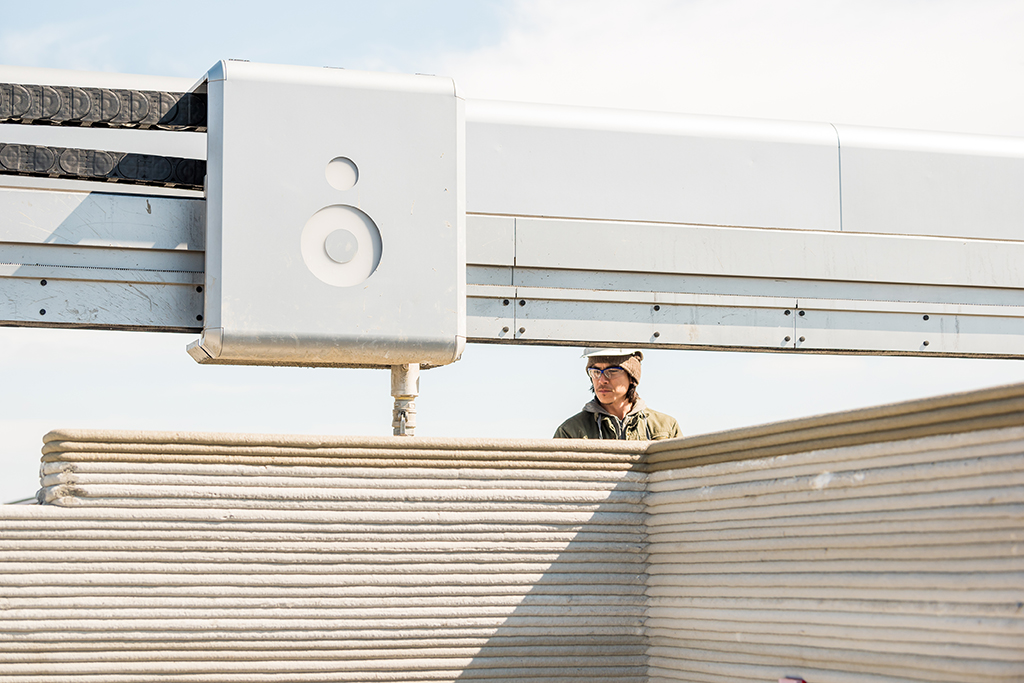
When the idea was just forming, nobody wanted to fund something they were not even sure was possible. We had to come up with some form of derisking the technology, of showing that it was possible. ICON had to get houses on the ground, and, to do that, we had to get the technology ready.

Austin also has some of the strictest building codes, and we are proud of the hard work to obtain a full occupancy permit for the first home printed in East Austin. We worked with the city, inspectors, and structural engineers to follow guidelines both during preplanning and in postprint phases.# Describe the process to create a 3D-printed home—from concept to final standing product?
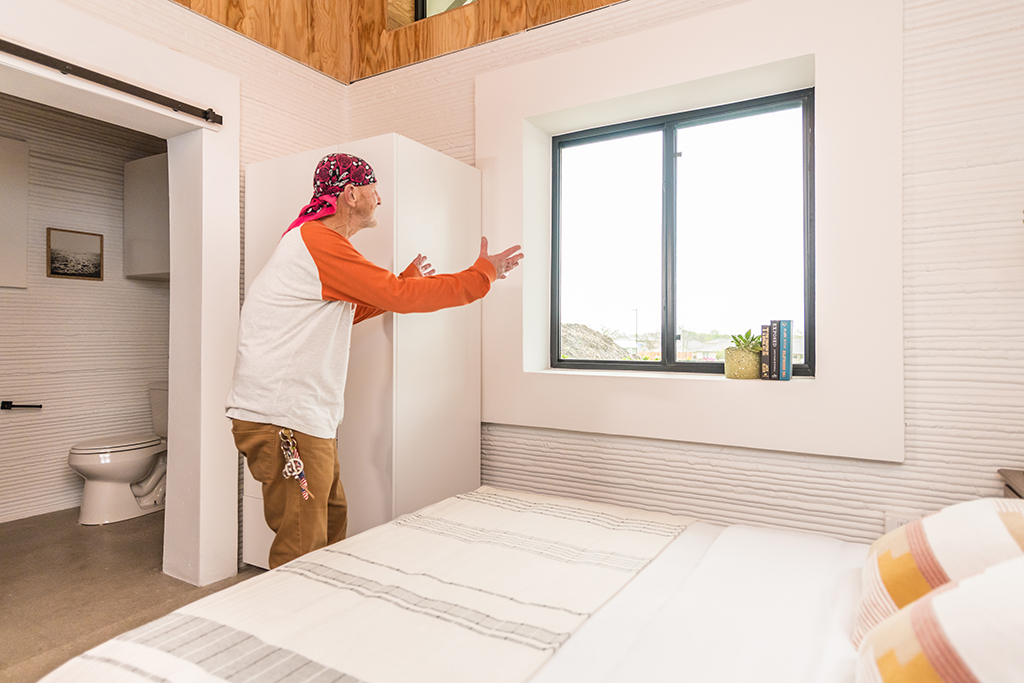
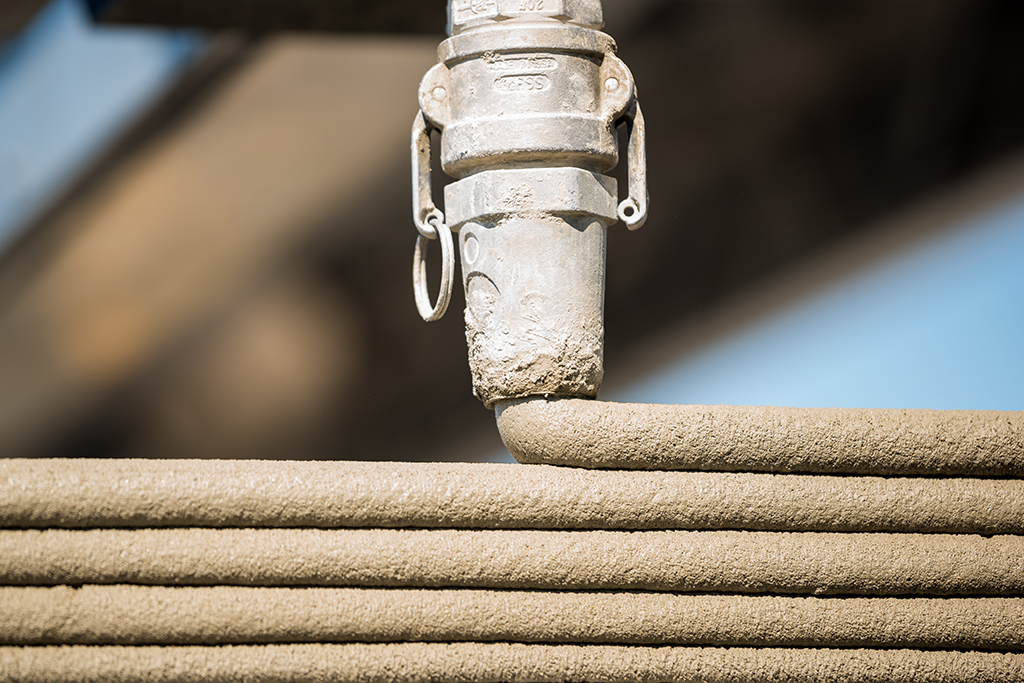
Our tech team works closely on structural engineering and architecture plans. Once a design is finalized, it is converted to a digital file that the Vulcan II printer can then follow. The print jobs vary based on the complexity of the design, size, and other considerations, such as location and weather. 

Your mission is largely centered around affordability, giving back to the community, and sustainability. Would you go into more detail on these aspects of your mission?

It has been an honor to partner with Mobile Loaves & Fishes, a social outreach organization. They’re one of the most innovative companies in Texas, and they started Community First! The village, which is the country’s only development designed specifically for the chronically homeless. We’ve built a series of 3D-printed homes in the northeast Austin village, helping to house 480 individuals who were previously homeless. We also delivered a beautiful welcome center for the village. The work Mobile Loaves & Fishes is doing to serve those who have experienced homelessness is inspiring. It makes all of us at ICON want to bring the very best of ourselves to the job each day. It pushes us to achieve our mission to deliver dignified, affordable housing to everyone, everywhere.#Can someone request a 3D-printed home from ICON?
Right now, ICON is working on a few big projects to deliver homes in Latin America and central Texas. While we are not currently able to accommodate individual home requests, it is a goal to get there in the future as we continue to scale by building more printers and delivering homes in more areas.

Do you think 3D printing is the future of home construction?
The housing of our future must be different than the housing we have known. 3D printing offers speed and decreases the amount of manual labor needed. Concrete is also a well-understood, affordable, resilient material with a high thermal mass (which offers comfort and energy efficiency). There are less waste and more freedom for design—curves and slopes are no more challenging or expensive than straight lines. 3D printing combines multiple systems into one system that encompasses foundation, structure, and insulation.#What is your vision for the future of ICON? What is the ultimate goal?

We believe that it is existentially urgent to find a way to shelter ourselves in a way that is more affordable and sustainable. We believe 3D printing can completely shift the paradigm of home building, eliminating the need for folks to choose between things like affordability, design freedom, and sustainability. We want a world that makes resilient housing accessible to everyone.

Posted in Market News
April 8, 2021

To Renovate or Not To Renovate Before You Sell

To Renovate or Not To Renovate Before You Sell | MyKCM

When thinking about selling, homeowners often feel they need to get their house ready with some remodeling to make it more appealing to buyers. However, with so many buyers competing for available homes right now, renovations may not be as vital as they would be in a more normal market. Here are two things to keep in mind if you’re thinking of selling this season.

1. There aren’t enough homes for sale right now.

A normal market has a 6-month supply of houses for sale, but today’s housing inventory sits far below that benchmark. According to the National Association of Realtors (NAR), there’s only a 1.9-month supply of homes available today. As a result, buyer competition is high and homes are only on the market for about 21 days, during which time many receive multiple offers from hopeful buyers.

In a competitive market that’s moving so quickly, it makes sense to sell your house when buyers are scooping homes up as fast as they’re being listed. Spending costly time and money on renovations before you sell might just mean you’ll miss your key window of opportunity. While certain repairs on your house may be important, your best move right now is to work with a real estate advisor to determine which improvements are truly necessary, and which ones are not likely to be deal-breakers for buyers.

Today, many buyers are more willing to take on home improvement projects themselves in order to get the home they’re after, even if it means putting in a little extra work. Home Advisor explains:

When it comes to the number of home improvement projects completed, Gen Z homeowners are leading the pack, completing an average of 3.5 projects. Millennials closely follow Gen Z, taking on an average of 3.3 projects, followed by Gen X at 2.8 projects. Boomers completed an average of 2 projects, and the Silent Generation completed the fewest projects, on average, at 1.8 per household. Compared to 2019, millennials are spending 60% more on home improvement and doing on average 30% more projects.”

In this market, it may be wise to let future homeowners remodel the bathroom or the kitchen to make design decisions that are best for their specific taste and lifestyle. As a seller, your dollars and time might be better spent working on small cosmetic updates, like refreshing some paint and power washing the exterior. Instead of over-investing in your home with upgrades that the buyers may change anyway, work with a real estate professional to determine the key projects that will maximize your listing, without overdoing it.

2. Focus on getting a good return on your investment.

When planning any bigger projects to tackle, you and your real estate agent will want to discuss the potential return on your investment and if those projects are worth the cost. Some homes do need a kitchen or bathroom renovation, roof repairs, or other major work, but definitely not all of them. You might be surprised by how well your house could fair in today’s sellers’ market. Hanley Wood states:

“The 2020 Cost vs. Value report shows a predictable increase in costs for all 22 remodeling projects but a consistent dip in the perceived value of those projects at the time of home sale, as estimated by real-estate professionals in more than 100 metro areas across the U.S. This results in a slight downturn on the return on investment for nearly all projects relative to the trends we saw in last year’s report.”

Ideally, homeowners getting ready to move should try to avoid over-investing in big renovations if they won’t make that money back when they sell their house. According to the 2020 State of Home Spending report from Home Advisor:

The average household spending on home services rose to $13,138, an increase over last year’s survey results, where homeowners who did projects spent $9,081 on average in 2019.”

Before you renovate, contact a local real estate professional to see if it’s the best course of action. You may find out that putting your house on the market as-is will help you sell quickly, and it may result in the best return on your investment. Every home is different, but a conversation with your agent is mission-critical to make sure you make the right moves when selling this season.

Bottom Line

We’re in a strong sellers’ market, and that means you have the leverage to sell your house on your terms. Let’s connect today to determine if renovating is really the best way to spend your time and money before you sell.

Posted in Selling Tips
April 7, 2021

Should We Fear the Surge in Cash-Out Refinances?

Should We Fear the Surge in Cash-Out Refinances? | MyKCM

Freddie Mac recently released their Quarterly Refinance Statistics report which covers refinances through 2020. The report explains that the dollar amount of cash-out refinances was greater in 2020 than in recent years. A cash-out refinance, as defined by Investopia, is:

“a mortgage refinancing option in which an old mortgage is replaced for a new one with a larger amount than owed on the previously existing loan, helping borrowers use their home mortgage to get some cash.”

The Freddie Mac report led to articles like the one published by The Real Deal titled, House or ATM? Cash-Out Refinances Spiked in 2020, which reports:

“Americans treated their homes like ATMs last year, withdrawing $152.7 billion amid a cash-out refinancing spree not seen since before the 2008 financial crisis.”

Whenever you combine the terms “spiked,” “homes like ATMs,” and “financial crisis,” it conjures up memories of the housing crash we experienced in 2008.

However, that comparison is invalid for three reasons:

1. Americans are sitting on much more home equity today.

Mortgage data giant Black Knight just issued information on the amount of tappable equity U.S. homeowners with a mortgage have. Tappable equity is the amount of equity available for homeowners to use and still have 20% equity in their home. Here’s a graph showing the findings from their report:In 2006, directly before the crash, tappable home equity in the U.S. topped out at $4.6 trillion. Today, that number is $7.3 trillion.

As Black Knight explains:

“At year’s end, some 46 million homeowners held a total $7.3 trillion in tappable equity, the largest amount ever recorded...That’s an increase of more than $1.1 trillion (+18%) since the end of 2019, the largest percentage gain since 2013 and – you guessed it – the largest dollar value gain in history, to boot. All in all, it works out to roughly $158,000 on average per homeowner with tappable equity, up nearly $19,000 from the end of 2019.”

2. Homeowners cashed out a much smaller amount this time.

In 2006, Americans cashed out a total of $321 billion. In 2020, that number was less than half, totaling $153 billion. The $321 billion made up 7% of the total tappable equity in the country in 2006. On the other hand, the $153 billion made up only 2% of the total tappable equity last year.

3. Fewer homeowners tapped their equity in 2020 than in 2006.

Freddie Mac reports that 89% of refinances in 2006 were cash-out refinances. Last year, that number was less than half at 33%. As a percentage of those who refinanced, many more Americans lowered their equity position fifteen years ago as compared to last year.

Bottom Line

It’s true that many Americans liquidated a portion of the equity in their homes last year for various reasons. However, less than half of them tapped their equity compared to 2006, and they cashed-out less than one-third of that available equity. Today’s cash-out refinance situation bears no resemblance to the situation that preceded the housing crash.

Posted in Market Updates
April 6, 2021

Is Your Yard Equipment Ready for Spring?

As spring finally starts to arrive, there are likely a number of tasks around the house that will be kicking off in the coming weeks. Whether you’re mowing the lawn, prepping the garden, or refreshing those flower beds, it’s time to break out your equipment and get to work. One question, though: Is all your yard equipment actually ready for spring?

If you’re like a lot of people, at the end of the year you just clean up your equipment a bit and put it into storage. If you don’t do anything else with it, though, this can actually shorten your equipment’s life and increase the likelihood of breakdown during the busy spring period. Before you dive into all those spring tasks, here are a few things you should do to keep your mowers, tillers, and everything else running smoothly.


Change Those Fluids

When was the last time you changed the oil in your mower? How old is the gas in your trimmer? As the spring arrives, you should start your equipment out with fresh fluids. Not only will this ensure that your engine is properly lubricated when you start your various spring tasks, but it will also prevent potential problems that can result from old gas breaking down over the long winter months.

Depending on the equipment you use, this can also be a great time to lubricate other moving parts or grease any bearings that might have dried out while things were in storage. Check your owner’s manuals to see if there are any other fluid or lubrication recommendations for your equipment while you’re working on your spring prep. If you can’t find the owner’s manual, check the manufacturer’s website or other online resources for tips.

Sharpen Your Blades

There are many pieces of yard equipment that feature blades or other cutting surfaces. These can get dull as time goes by, and in some cases may even pick up a little bit of rust over the winter depending on where you live. This can cause some serious problems heading into a new year, resulting in uneven cuts and potentially even contributing to blading damage or other failures. Before you fire things up for the first time this spring, spend a little time sharpening those edges to make sure that everything’s working like it should.

Of course, not all blades can be revived by simple sharpening. While you’re checking them out, look for cracks or other signs of damage in the blades that can’t simply be buffed out or sharpened away. If a blade is cracked or damaged, replace it completely instead of trying to sharpen it. Cracked or damaged blades can break while under the stress of use, potentially causing damage or injuries in the process. The cost of a new blade is a small price to pay for staying safe while working around the house.

Other Equipment Maintenance

Depending on the equipment you have, there may be other maintenance tasks you need to perform as well. Changing oil filters, fuel filters, and spark plugs are great beginning-of-spring maintenance activities that go a long way toward getting your year off on the right foot. If you use electric equipment, test-charge any batteries to make sure that they can still hold a good charge after being in storage for the winter. Pneumatic and water hoses should be checked for leaks before use, and any nozzles or sprayers should be cleaned to remove dust and other gunk.

Posted in Home Staging Tips
April 5, 2021

How a Change in Mortgage Rate Impacts Your Homebuying Budget

How a Change in Mortgage Rate Impacts Your Homebuying Budget | MyKCM

Mortgage rates are on the rise this year, but they’re still incredibly low compared to the historic average. However, anytime there’s a change in the mortgage rate, it affects what you can afford to borrow when you’re buying a home. As Sam Khater, Chief Economist at Freddie Macshares:

Since January, mortgage rates have increased half a percentage point from historic lows and home prices have risen, leaving potential homebuyers with less purchasing power.” (See graph below):

How a Change in Mortgage Rate Impacts Your Homebuying Budget | MyKCMWhen buying a home, it’s important to determine a monthly budget so you can plan for and understand what you can afford. However, when you need to stick to your budget, even a small increase in the mortgage rate can make a big difference.

According to the National Association of Realtors (NAR), today, the median existing-home price is $313,000. Using $300,000 as a simple number close to the median price, here’s an example of how a change in mortgage rate impacts your monthly principal and interest payments on a home.How a Change in Mortgage Rate Impacts Your Homebuying Budget | MyKCMIf, for example, you’re getting ready to buy a home and know your budget allows for a monthly payment of $1200-1250 (marked in gray on the table above), every time the mortgage rate increases, the loan amount has to decrease to keep your monthly cost in range. This means you may have to look for lower-priced homes as mortgage rates go up if you want to be able to maintain your budget.

In essence, it’s ideal to close on a home loan when mortgage rates are low, so you can afford to borrow more money. This gives you more purchasing power when you buy a home. Mark Fleming, Chief Economist at First Americanexplains:

“Monthly payments have remained manageable despite soaring home prices because of low mortgage rates. In fact, monthly payments remain below the $1,250 to $1,260 range that we saw in both fall 2018 and spring 2019, but they are on track to hit that level this spring.

Although they remain low, mortgage rates have begun to increase and are expected to rise further later in the year, thus affordability will test buyer demand in the months ahead and likely help slow the pace of price growth.”

Today’s mortgage rates are still very low, but experts project they’ll continue to rise modestly this year. As a result, every moment counts for homebuyers who want to secure the lowest mortgage rate they can in order to be able to afford the home of their dreams.

Bottom Line

Thanks to low mortgage rates, the spring housing market's in bloom for buyers – but these favorable conditions may not last for long. Let’s connect today to start the home buying process while your purchasing power is still holding strong.

Posted in Market News
April 2, 2021

Buyer & Seller Perks in Today’s Housing Market

Buyer & Seller Perks in Today’s Housing Market | MyKCM

Right now, the housing market is full of outstanding opportunities for both buyers and sellers. Whether you’re thinking of buying your first home, moving up to a bigger one, or selling so you can downsize this spring, there are perks today that are powering big moves for people across the country. Here are the top two to keep on the radar this season.

The Biggest Perk for Buyers: Low Mortgage Rates

 Today’s most compelling buyer incentive is low mortgage interest rates. The 30-year fixed-rate is now averaging just over 3%. While that’s slightly higher than the record-lows from 2020 and earlier this year, it’s still way lower than historic norms, making purchasing a home an ongoing perk for hopeful buyers (See graph below):Buyer & Seller Perks in Today’s Housing Market | MyKCMThis is a huge advantage for buyers and helps to make owning a home attainable for more households – and there’s good reason to strive for homeownership. The latest Homeowner Equity Report from CoreLogic shows how homeowners saw major gains in their net worth last year, all thanks to owning a home. Frank Martell, President, and CEO of CoreLogicexplains:

Positive factors like record-low interest rates and a booming housing market encouraged many families to enter homeownership. This growing bank of personal wealth that homeownership affords was noticed by many but in particular for first-time buyers who want a piece of the cake. As a result, we may see more of those currently renting start to enter the market in the near future.”

Low mortgage rates are a plus for buyers right now, but experts forecast we’ll see them continue to rise as the year goes on. If you’re ready to purchase a home, it’s wise to get started on the process soon so you can secure today’s comparatively low rate.

The Biggest Perk for Sellers: Low Inventory

Today, there are simply not enough houses on the market for the number of buyers looking to purchase them, and it’s creating a serious sellers’ market. According to Danielle Hale, Chief Economist at realtor.com:

“Total active inventory continues to decline, dropping 50 percent. With buyers active in the market and sellers still slow to put homes up for sale, homes are selling quickly and the total number actively available for sale at any point in time continues to decline.” (See map below):

Buyer & Seller Perks in Today’s Housing Market | MyKCMThe lack of houses for sale continues to challenge the market, and with low mortgage rates fueling buyer demand, homes are hard for buyers to find today. According to the latest Realtors Confidence Index Survey by the National Association of Realtors (NAR), the average house is now receiving 4.1 offers and is on the market for only 20 days.

Buyers are clearly eager to purchase, and because of the shortage of inventory available, they’re often entering bidding warsThis is one of the factors keeping home prices strong and giving sellers leverage in the negotiation process.

Homeowners who are in a position to sell shouldn’t wait to make their move. There’s a light at the end of the tunnel for today’s inventory shortage, so listing this spring will get your house on the market when conditions are most favorable. With low inventory and high buyer demand, homeowners can potentially earn a greater profit on their houses and sell them quickly in the fast-paced spring market.

Bottom Line

Whether you’re thinking about buying or selling a home, there are major perks available in today’s housing market. Let’s connect today to discuss how these favorable conditions play to your advantage in our local area.

Posted in Market Updates
April 1, 2021

GREAT WINE-STORAGE IDEAS

TIPS FOR STORING WINE AT HOME

If you are a big wine connoisseur or just saving a few bottles to crack open on special occasions, it’s important to understand how best to store them safely until you’re ready to partake. Follow the guidelines below!

Temperature

To ensure each wine bottle maintains the proper flavor and aroma, storing it at the correct temperature is essential. Regardless if it is red, white, or sparkling, storing your bottles at 53°F to 57°F is most ideal. Keeping your bottles in a room where the temperature is much warmer than that may cause the flavor to become flat. Keep your wine in the dark and away from direct UV rays as much as you can to protect the wine’s flavor.

Moisture

Controlling the humidity in the room is important if you plan to store bottles for more than a couple of years. The ideal humidity for storage is between 50 to 75 percent and anything below that could cause the corks to dry out, letting air seep into the bottle.

Positioning

Generally, it is advised to store wine bottles on their sides. This allows the wine to stay up against the cork which should aid in keeping it from drying out. However, if you don’t plan to store the wine for long or if the bottle has a screw top or plastic cork, this is not required for safe storage.

Timing

Not all wine is designed to have a long shelf life or be aged. Make sure you know what the winemaker’s intention was for that particular bottle. It is always better to open it a little early and enjoy it!


Posted in Home Staging Tips
March 31, 2021

Seed Starting 101


Planting a garden in the spring is a great way to have fresh fruits and vegetables throughout the year. Even homeowners who don’t have space for a large garden plot often plant a few things in containers or small raised gardens on their property. While it’s not quite time to start planting in a lot of places, that doesn’t mean you can’t get the jump on gardening season by starting your seeds. Depending on where you live and what you’re planting in your garden, there are a few different ways to get seeds started for your garden this year.


Starting Seeds Indoors

Before starting your seeds, be sure to read the seed packet to get an idea of how long before planting you should get your seeds started. In many cases this will be six to eight weeks, but it could be longer or shorter depending on exactly what you’re growing. In addition, the packet should give you an idea of when is best to plant based on where you live; you can then time you seed starting based on that guideline.

Prepare a growing medium by using a seed-starting mix or other potting soil. Break it apart to loosen it, then dampen it slightly with some water. Avoid using outdoor garden soil or soil with added fertilizers, as seeds won’t need the extra fertilizer or organic materials from the soil and having too much of these can actually cause problems.

Once you’ve prepped your growing medium, fill some seed-starting trays or other containers until they’re around 2/3 full. Place a few seeds in each cell or container, covering them with more of the dampened mix. Add just a little bit of water, then place the containers in a warm, sunny place. Cover them with a thin sheet of plastic wrap or plastic seed-starting domes to help control the humidity until the seeds sprout.

Starting Seeds Outdoors

Some plants, including a lot of flowers and certain vegetables such as squash and beans, do better when started outdoors. In many cases these are referred to as “direct sow” seeds because they are typically planted directly into the ground instead of being started in pots. This is often the case with plants that germinate and grow quickly, since they can rapidly outgrow indoor growing spaces. If you want to get a jump on these seeds, you’ll need to start them outdoors.

If you have a greenhouse set up, you can start a variety of seeds in it, including seeds that you might otherwise start indoors. Even if you don’t have a dedicated greenhouse set up, cutting the bottoms off of gallon water or milk jugs can still give you the benefits of a greenhouse without the dedicated structure. Failing that, you can also use plastic sheeting to construct a greenhouse tent to achieve the same end.

If you don’t wish to plant directly into the soil, use small individual flowerpots filled with the same seed starter material you would use for indoor starting. This provides more room for root development while still fitting inside of a greenhouse (either static or makeshift) for warmth and weather protection. Once the plants start to outgrow their greenhouses or fill out their pots, they are ready to transfer to the soil.

Planting Time

When it comes time to plant seeds that were started indoors or in pots, the process is pretty simple. Indoor plants should be placed in a partially shaded area that’s protected from the wind for a few hours each day, gradually exposing them to more sunlight and wind for around seven to ten days before planting. Once you’re ready to actually plant, dig a hole slightly larger than the container you started your seed in and add more starting soil to the bottom of it. Remove any excess sprouts from each starter, leaving the strongest plant as you transfer the plant and its surrounding soil to the hole. Fill in around it with soil, then water.

Posted in Home Staging Tips
March 30, 2021

WHAT TO DO WITH AN UNFINISHED BASEMENT

Although currently dimly lit and a little rough on the eyes, your unfinished basement still has a lot of potentials. With just a little love and the help of the following ideas, you can spice it up in no time and get some great use out of the space.

  1. Add a pop of color. Give your basement a whole different look without a big renovation by adding some color to space. Consider painting and sealing the floors, opening up the room by painting the rafters white or a light color, or creating a bold accent wall.
  2. Divide the space. Want to make your basement a multi-use room? Partition out the area by installing an inexpensive curtain system. This can be done either with a curtain track or a simple wire, some hooks, and curtains will suffice.
  3. Add foam mats. Whether you’d like to use the basement as a home gym to get a quick workout in or a place for the kids to play and rough house, adding some foam mats into the mix is a great and easy solution. They come in various colors and can quickly be picked up and tucked away if need be.
  4. Use a large rug. As an alternative to adding mats, find a large, eye-catching rug to be used as a focal point, and furnish the area around it.
  5. Add lighting. Basements often offer very little built-in lighting and few outlets around the room. Consider stringing café lighting across space from the rafters to give a nice ambiance and glow without any difficult electrical work.

Posted in Home Staging Tips