Area Real Estate News & Market Trends

You’ll find our blog to be a wealth of information, covering everything from local market statistics and home values to community happenings. That’s because we care about the community and want to help you find your place in it. Please reach out if you have any questions at all. We’d love to talk with you!

March 15, 2021

Will the Housing Market Bloom This Spring?

Will the Housing Market Bloom This Spring? | MyKCM

Spring is almost here, and many are wondering what it will bring for the housing market. Even though the pandemic continues on, it’s certain to be very different from the spring we experienced at this time last year. Here’s what a few industry experts have to say about the housing market and how it will bloom this season.

Danielle Hale, Chief Economistrealtor.com:

“Despite early weakness, we expect to see new listings grow in March and April as they traditionally do heading into spring, and last year’s extraordinarily low new listings comparison point will mean year over year gains. One other potential bright spot for would-be homebuyers, new construction, which has risen at a year over year pace of 20% or more for the last few months, will provide additional for-sale inventory relief.”

Ali Wolf, Chief Economist, Zonda:

“Some people will feel comfortable listing their home during the first half of 2021. Others will want to wait until the vaccines are widely distributed. This suggests more inventory will be for sale in late 2021 and into the spring selling season in 2022.”

Freddie Mac:

“Since reaching a low point in January, mortgage rates have risen by more than 30 basis points… However, the rise in mortgage rates over the next couple of months is likely to be more muted in comparison to the last few weeks, and we expect a strong spring sales season.”

Mark Fleming, Chief Economist, First American:

“As the housing market heads into the spring home buying season, the ongoing supply and demand imbalance all but assures more house price growth...Many find it hard to believe, but housing is actually undervalued in most markets and the gap between house-buying power and sale prices indicates there’s room for further house price growth in the months to come.”

Bottom Line

The experts are very optimistic about the housing market right now. If you pressed pause on your real estate plans over the winter, let’s chat to determine how you can re-engage in the homebuying process this spring.

Posted in Market News
March 12, 2021

What Are the Benefits of a 20% Down Payment?

What Are the Benefits of a 20% Down Payment? | MyKCM

If you’re thinking of buying a home this year, you may be wondering how much money you need to come up with for your down payment. Many people may think it’s 20% of the loan to secure a mortgage. While there are plenty of lower down payment options available for qualified buyers who don’t want to put 20% down, it’s important to understand how a larger down payment can have great benefits too.

The truth is, there are many programs available that allow you to put down as little as 3.5%, which can be a huge benefit to those who want to purchase a home sooner rather than later. Those who have served our country may also qualify for a Veterans Affairs Home Loan (VA) and may not need a down payment. These programs have really cut down the savings time for many potential buyers, enabling them to start building family wealth sooner.

Here are four reasons why putting 20% down is a good plan if you can afford it.

1. Your interest rate may be lower.

A 20% down payment vs. a 3-5% down payment shows your lender you’re more financially stable and not a large credit risk. The more confident your lender is in your credit score and your ability to pay your loan, the lower the mortgage interest rate they’ll likely be willing to give you.

2. You’ll end up paying less for your home.

The larger your down payment, the smaller your loan amount will be for your mortgage. If you’re able to pay 20% of the cost of your new home at the start of the transaction, you’ll only pay interest on the remaining 80%. If you put down 5%, the additional 15% will be added to your loan and will accrue interest over time. This will end up costing you more over the lifetime of your home loan.

3. Your offer will stand out in a competitive market.

In a market where many buyers are competing for the same home, sellers like to see offers come in with 20% or larger down payments. The seller gains the same confidence as the lender in this scenario. You are seen as a stronger buyer with financing that’s more likely to be approved. Therefore, the deal will be more likely to go through.

4. You won’t have to pay Private Mortgage Insurance (PMI)

What is PMI? According to Freddie Mac:

PMI is an insurance policy that protects the lender if you are unable to pay your mortgage. It's a monthly fee, rolled into your mortgage payment, that is required for all conforming, conventional loans that have down payments less than 20%. Once you've built equity of 20% in your home, you can cancel your PMI and remove that expense from your mortgage payment.

As mentioned earlier, when you put down less than 20% when buying a home, your lender will see your loan as having more risk. PMI helps them recover their investment in you if you’re unable to pay your loan. This insurance isn’t required if you’re able to put down 20% or more.

Many times, home sellers looking to move up to a larger or more expensive home are able to take the equity they earn from the sale of their house to put down 20% on their next home. With the equity homeowners have today, it creates a great opportunity to put those savings toward a 20% or greater down payment on a new home.

If you’re looking to buy your first home, you’ll want to consider the benefits of 20% down versus a smaller down payment option.

Bottom Line

If you’re thinking of buying a home and are already saving for your down payment, let’s connect to discuss what fits best with your long-term plans.

Posted in Buying Tips
March 11, 2021

Easy Ways to Make Your Home More Pet Friendly


Pets play a large part in many families. While these fuzzy (and sometimes not-so-fuzzy) friends can bring a lot of fun and companionship, keeping pets happy and healthy can take a lot of work as well. One way to keep this under control is to improve the overall pet-friendliness of your home. Much like babyproofing before bringing home a new child helps to prevent accidents and other problems, putting in some time to make your home more pet friendly now will save a lot of headaches and other issues down the line.


Pet-Friendly Homes

There are a few different concerns you should consider when trying to come up with ways to make your home more pet-friendly. Think about whether there are any areas of the home that your pet might get hurt or sick if they get into. Do you have a pet that’s likely to chew on things? Stop to consider what those things it chews on are made of. Take an inventory of all the things that you don’t want your pet to damage or break; how many of them can’t be replaced?

As you can see, pet friendliness includes more than just restricting access to certain parts of the home. A truly pet-friendly home is one that will keep your pet safe in many ways while also protecting important items from your pets. There are a few different ways to go about this, of course, and there is no one right answer when it comes to how you should approach making your home more pet friendly.

Common Pet-Proofing Techniques

The way that you approach pet proofing and making your home more pet friendly will depend in large part on how your home is designed and decorated. With that said, here are a few ideas to serve as starting points for your pet-friendly revamp.

  • Check the interior of your home for peeling paint or similar problems, especially if you have an older home. Some paints contain materials that could be toxic for pets, so removing peeling paint areas and giving everything a fresh coat of pet-safe paint can help to keep your companions safe.
  • Secure potentially dangerous areas like stairwells, fireplaces, and crawlspace access points. Replace rusted or loose coverings to make sure that they can’t be pulled back or shaken free by a determined pet. Then install baby gates or other barriers as needed which will allow you to get through but prevent passage by those without opposable thumbs.
  • Lock up cleaners and other chemicals where your pets can’t access them. Some scented cleaners may smell like food to pets, and even non-toxic chemicals can still make pets sick or cause other problems if ingested. If you have medications in the home, they should be locked up similarly.
  • Get a trash can with a sturdy lid, preferably one that can be operated hands-free. This will not only keep trash from being spread out in your home but can also keep pets from eating things that they really shouldn’t.

Of course, this is just the start of ways to secure your home and make it safe for your pets. Regardless of the specifics, though, the end goal is to make sure that there are fewer things within reach of your pets that could potentially cause them harm.


Posted in Home Keppr
March 10, 2021

Home Prices: What Happened in 2020? What Will Happen This Year?

Home Prices: What Happened in 2020? What Will Happen This Year? | MyKCM

The real estate market was on fire during the second half of 2020. Buyer demand was way up, and the supply of homes available for sale hit record lows. The price of anything is determined by the supply and demand ratio, so home prices skyrocketed last year. Dr. Lynn Fisher, Deputy Director of the Federal Housing Finance Agency (FHFA) Division of Research and Statisticsexplains:

“House prices nationwide recorded the largest annual and quarterly increase in the history of the FHFA Home Price Index. Low mortgage rates, pent up demand from homebuyers, and a limited housing supply propelled every region of the country to experience faster growth in 2020 compared to a year ago despite the pandemic.”

Here are the year-end home price appreciation numbers from the FHFA and two other prominent pricing indexes:

The past year was truly a remarkable time for homeowners as prices appreciated substantially. Lawrence Yun, Senior Economist at the National Association of Realtors (NAR), reveals:

“A typical homeowner in 2020, just by being a homeowner, would have accumulated around $24,000 in housing wealth.”

What will happen with home prices this year?

Many experts believe buyer demand will soften somewhat as mortgage rates are poised to bump up slightly. Some also believe the inventory challenge will ease as more listings come to market this year.

Based on this, most forecasters anticipate we’ll see strong appreciation in 2021 – but not as strong as last year. Here are seven prominent groups and their projections:Home Prices: What Happened in 2020? What Will Happen This Year? | MyKCM

Bottom Line

Home price appreciation will be strong this year, but it won’t reach the historic levels of 2020. Let’s connect if you’d like to find out what your house is currently worth in our local market.

Posted in Market Updates
March 9, 2021

Sliding Barn Doors for Beginners


The cottage look has become a huge trend for homeowners, especially those with older homes that have lost a lot of their original charm to generic remodels over generations. One of the big elements of this new wave in design is the sliding barn door, a simple door mounted on a track that slides to cover a doorway. It’s not a fancy invention, nor is it a new one, so why are they getting so much attention all of a sudden?


The Sliding Barn Door Aesthetic

Sliding barn doors add a ton of cottage chic to a home, especially one that’s already boasting pre-modern features like custom hand-built kitchen cabinetry, built-in storage, and unusual spaces. The sliding barn door is a simple but elegant touch. It’s literally just a door built from wooden slats, just like you’d see on an old-fashioned barn on a farm. That rugged, simple look complements a lot of different styles, especially considering the many different kinds of materials that can be used to achieve the final result.

Considerations Before Installing Sliding Barn Doors

There are many things to consider before you choose sliding barn doors for your home. The first, and most important, is whether or not a barn door actually makes sense with the rest of your design. If you’re literally choosing a barn door because they’re trending right now, that’s about the worst possible reason to make the call. Instead, ask yourself if you really like the cottage chic look, and if you do, if it makes sense with the other design choices you’re making in your home. Although some purists may argue that there’s absolutely no place for a cottage look in a modern home, most designers would agree that the most important thing is consistency. After all, a lot of homes built in the last 40 or so years don’t really have a strong aesthetic of their own, which leaves a lot of room for creative minds to wander.

If you do decide you want to go with a barn door, and it’s consistent with the styling of your home, keep these additional things in mind while choosing the door and where it will be installed:

  • Barn doors don’t insulate well. Because barn doors hang on a sliding track, rather than sealing shut, there’s more air, light, and sound infiltration around them. This is fine for a lot of uses, but may make them a poor choice for spaces like bedrooms or bathrooms where you’d like more privacy. If you have pets, for safety’s sake, choose a door and hardware that are heavy enough to keep the bottom of the door from being shoved forward to allow a smart dog or cat to open these doors from the bottom.
  • They do save a ton of space. Even though they’re not the greatest doors for insulation, barn doors can save a ton of space that a regular door will require to swing. Instead of losing a whole wall to opening a door, you can instead move the furniture a few inches off the wall to allow the barn door to slide behind. Unlike pocket doors, you don’t need to tear out a wall to install a barn door; you simply run along the outer wall. This can also help minimize the impact of doors that cover water closets and pantries.
  • Planning is important. Before you decide that you absolutely must have a barn door, look very carefully at the space where you think it should go. Remember, the door will need room to move along a track, so there must be room on both sides of the door opening (at least enough to allow for the hardware), and no elements that stick out of the wall. If you’ve got a flat light switch or outlet that will end up under the door, consider how that will affect your ability to use the electricity in the room.


Posted in Home Staging Tips
March 8, 2021

How Smart Is It to Buy a Home Today?

How Smart Is It to Buy a Home Today? | MyKCM

Whether you’re buying your first home or selling your current house, if your needs are changing and you think you need to move, the decision can be complicated. You may have to take personal or professional considerations into account, and only you can judge what impact those factors should have on your desire to move.

However, there’s one category that provides a simple answer. When deciding to buy now or wait until next year, the financial aspect of the purchase is easy to evaluate. You just need to ask yourself two questions:

  1. Do I think home values will be higher a year from now?
  2. Do I think mortgage rates will be higher a year from now?

From a purely financial standpoint, if the answer is ‘yes’ to either question, you should strongly consider buying now. If the answer to both questions is ‘yes,’ you should definitely buy now.

Nobody can guarantee what home values or mortgage rates will be by the end of this year. The experts, however, seem certain the answer to both questions above is a resounding ‘yes.’ Mortgage rates are expected to rise and home values are expected to appreciate rather nicely.

What does this mean to you?

Let’s look at how waiting would impact your financial situation. Here are the assumptions made for this example:

  • The experts are right - mortgage rates will be 3.18% at the end of the year
  • The experts are right - home values will appreciate by 5.9%
  • You want to buy a home valued at $350,000 today
  • You decide on a 10% down payment

How Smart Is It to Buy a Home Today? | MyKCMHere’s the financial impact of waiting:

  • You pay an extra $20,650 for the house
  • You need an additional $2,065 for a down payment
  • You pay an extra $116/month in your mortgage payment ($1,392 additional per year)
  • You don’t gain the $20,650 increase in wealth through equity build-up

Bottom Line

There are many things to consider when buying a home. However, from a purely financial aspect, if you find a home that meets your needs, buying now makes much more sense than buying next year.

Posted in Buying Tips
March 5, 2021

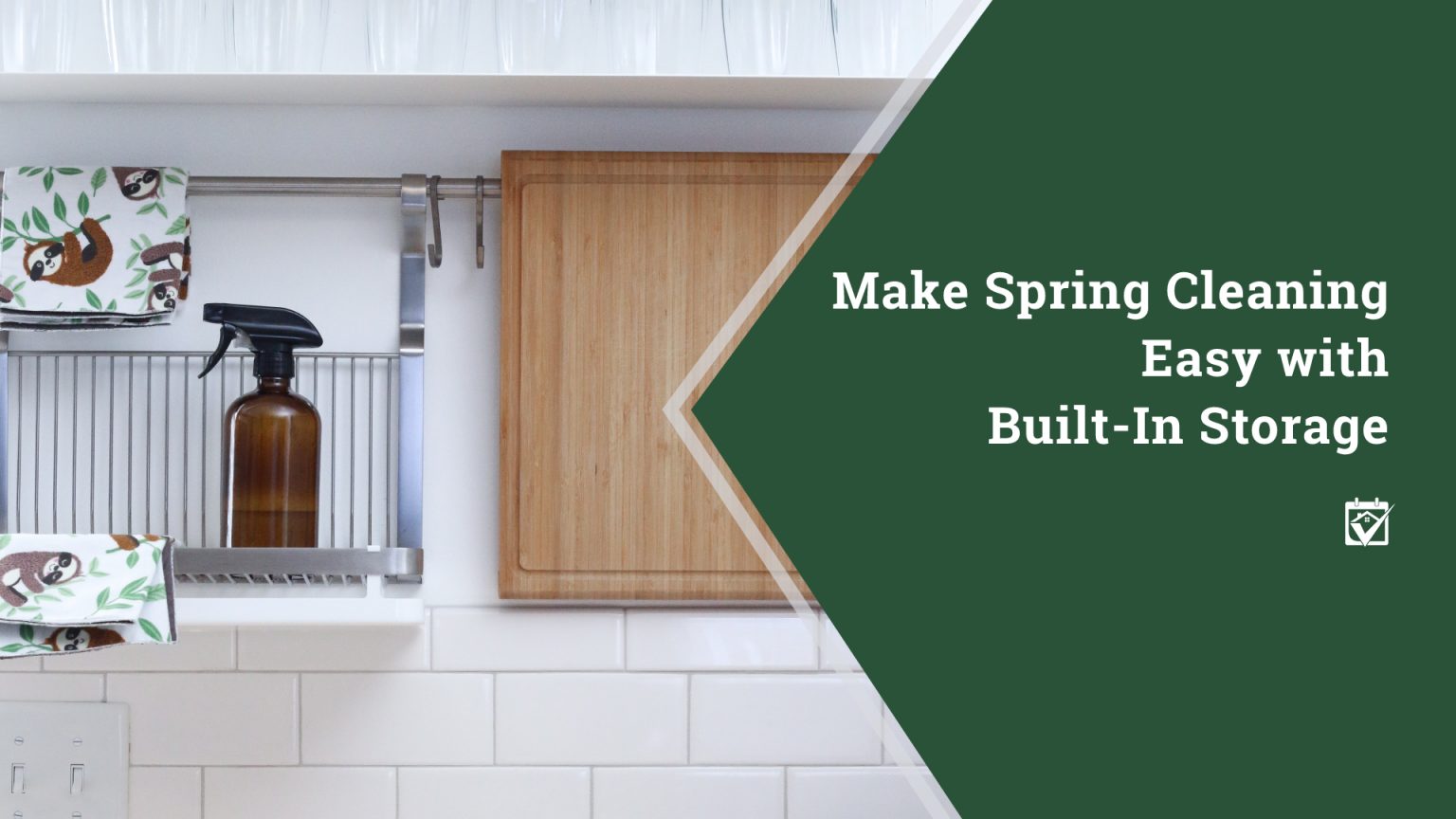
Make Spring Cleaning Easy with Built-In Storage

It might be a bit on the chilly side now, but it’s not going to be long before spring cleaning season is upon us again. It’s a great way to refresh spaces and toss out that stuff that’s just been collecting with no real purpose. But what do you do with the stuff you DO want to keep? Maybe you need some more storage spaces!

These days, there are tons of prefabricated kits that can help you turn your home into an organizational powerhouse, as well as plenty of small projects that you can do over a weekend to prepare for the inevitable. If you start building your future storage now, you’ll be totally ready for sorting and putting away when the grass starts to green again.

Built-In Storage Kits

You don’t have to be Bob Villa to install any of the many basic storage systems that are available through big box storage and home improvement centers across the country. Some are designed with specific kinds of storage in mind, like closet systems that help you make more room out of nothing at all. Other systems are designed to be extra sturdy for more challenging spaces, like garages or utility rooms. These out-of-the-box systems are a great way to add built-in storage, even if you’re not particularly handy. They often feature pre-cut pieces with just a few fasteners you’ll need to insert into the wall, along with step-by-step instructions to help you succeed.

But if you’re feeling up to it, don’t hesitate to pick up add-on parts for those systems, or go off the map entirely and use them in unexpected places, like under stairs, in mudrooms, and in other odd spaces in your house. Every nook can become mega storage if you have the right kind of system to install there.

Building From Scratch

If you’re a little braver or have some experience with home repairs, you may want to take a serious look at spaces like garage ceilings, wall voids, rafters, and attic knee walls for the room you can reclaim. Ensure there’s no electrical wire or plumbing running in the space you have your eye on for extra storage, though. Skipping this step can lead to some serious repercussions, including, but not limited to, electrocution and pipe ruptures.

However, with a careful hand, you can take those formerly useless stretches of wall or ceiling and add things like built-in bookcases, cabinets, and drawers. Remember that your built-in can only be as deep as the void, minus the thickness of the back materials, so choose your spaces accordingly. Attic knee walls are especially fun options since there are usually deep voids behind them that you can transform into your storage fantasies.

Some Special Options for Kitchens

Kitchens are notorious for lacking storage or working space, but they also offer a lot of small spaces that most people tend to overlook. For example, if you have a lot of mugs or teacups, the simple act of installing mug hooks under your upper cabinets can permanently free up shelf space. The inside of your cabinets can host shallow storage racks, which are great for holding cleaning supplies, spices, and other small items.

Another option might be adding a rail to your backsplash, enabling you to hang up items that tend to end up scattered in the kitchen. Wouldn’t it be nice to actually know where the potholders are at any given time? You can do the same thing with pegboards or heavy-duty metal sheets you can attach pots, pans, utensils, and the like with magnetic hooks.


Posted in Home Keppr
March 4, 2021

TOP TIPS FOR HOUSE HUNTING ONLINE


Hunting for a new home online is a great place to start your search, but it should not be your end all be all. Good listing agents are excellent at highlighting the best features of the home, but keep in mind there may be more than meets the eye. To make the most of your time and efforts and gather a well-rounded picture of home listings online, keep the following three things in mind.

Stay up to date. When you start your search, make sure you find a site that pulls up-to-date listings directly from the multiple listing service (MLS) where real estate agents actively post their most current homes for sale. Many online resources update less often or fail to remove listings that are off the market, making it more difficult to sort through the clutter.

Pictures can be deceiving. Real estate photographers are experts at showing a home in the best possible light. Many use tools and strategies to boost appeal, such as a fisheye lens to make areas look larger and creative editing to make colors and textures really pop. But, often listings will not contain photos of unappealing parts of the home, like small closets or outdated bathrooms.

See it to believe it. Once you find what appears to be your dream home online, call up your real estate agent and schedule a showing. You want to take the opportunity to vet the home in person and explore every part of it before beginning the offer process. Your real estate agent will help you cover all your bases and will ask questions you may not have thought of.


Posted in Buying Tips
March 3, 2021

Drop Ceilings: Pros and Cons


Humans have long had a love/hate relationship with ceilings. On one hand, they help to hide the structure that keeps the rain out; on the other, they can be a pain to install and maintain over time. So when the idea of the drop ceiling started gaining momentum, it followed that two very die-hard camps formed almost immediately. But drop ceilings have changed dramatically since the first patents were introduced in 1919 and subsequent improvements made in the 30s and 50s. Today’s drop ceiling, while building on these same principles, is a very different creature.


Drop Ceilings Aren’t Just for Offices

Most people get their first exposure to drop ceilings in their office or schools, where two foot by four-foot

Pros and Cons of Drop Ceilings

Looks aside, drop ceilings are not for everyone. They aren’t even for every kind of space, contrary to what some people may believe. It also really depends on the installation style you’re working with whether or not a drop ceiling in question is going to be the best choice for your home. But in general you can expect the following truths about drop ceilings.

  • They’re simple to install. Drop ceilings are popular with a lot of DIYers because they’re easy to install and don’t require expert drywall skills to get a good result. Unlike drywall, which must be hung, the joints sealed, sanded, primered, painted, and painted again, a drop ceiling comes as a kit and is put together much more like flat-packed furniture. Follow the instructions and you should have the ceiling you expect.
  • Maintenance is minimal. Drywall and plaster crack, it’s a fact. It’s also a reason a lot of older homes have newer drop ceilings installed over the originals. Regular patching of ceilings as a home ages and shifts ever so slightly is a headache. Styrofoam ceiling panels have much more give and can flex as a house moves. Bonus points for areas like basements where wood may shrink and swell throughout the year.
  • They provide small amounts of insulation. Depending on how a drop ceiling is hung and what type you choose, you can expect a very small amount of insulation gain from them, as well as noise dampening. They’ve been used in homes with tall ceilings successfully to lower the heated envelope of the home from 10 feet to a more energy-efficient seven to eight feet across the country, but by doing this, you can also interfere with the way the home’s air exchange was designed to work. Take caution when dropping ceilings dramatically.
  • Headspace is reduced. Even when you’re using a drop ceiling in a very minimalistic way, there’s going to be a loss of headroom. This is because drop ceilings generally have to be hung on special brackets or dropped within a hanging framework. You may not lose a lot of headspaces, possibly only inches, but in areas like basements where inches can be too much loss, it’s a serious consideration.
  • Lighting solutions can be tricky. You’ll need to plan your lighting carefully when installing a drop ceiling. Because of the gap that tends to be present, even if it’s just a few inches worth, mounting lighting can require a great deal of planning and care. You may have to use special supports or choose different lighting types when you change a ceiling to a drop ceiling, or carefully design lighting if adding a drop ceiling to an area that’s never had a ceiling in it before.

 styrofoam rectangles are set in a grid, along with harsh fluorescent lights, in place of a more traditional plastered or drywalled ceiling. Because these drop ceilings can be very severe in appearance, the very phrase has become suspect. But there are other drop ceilings that aren’t quite so industrial, and can actually really add to your home’s design and unique interior space. These may mimic stamped tin ceilings, coffered ceilings, or a number of different kinds of decorative wood patterns like beadboard. You may not even recognize a modern drop ceiling simply from looking at it, and that’s really the point.


Posted in Home Keppr
March 2, 2021

How Much Leverage Do Today’s House Sellers Have?

How Much Leverage Do Today’s House Sellers Have?

How Much Leverage Do Today's House Sellers Have? | MyKCM

The housing market has been scorching hot over the last twelve months. Buyers and their high demand have far outnumbered sellers and a short supply of houses. According to the latest Existing Home Sales Report from the National Association of Realtors (NAR), sales are up 23.7% from the same time last year while the inventory of homes available for sale is down 25.7%. There are 360,000 fewer single-family homes for sale today than there were at this time last year. This increase in demand coupled with such limited supply is leading to more bidding wars throughout the country.

Rose Quint, Assistant Vice President for Survey Research with the National Association of Home Builders (NAHB), recently reported:

“The number one reason long-time searchers haven’t made a home purchase is not because of their inability to find an affordably-priced home, but because they continue to get outbid by other offers.”

A survey in the NAHB report showed that 40% of buyers have been outbid for a home they wanted to purchase. This is more than twice the percentage in 2019, which was 19%.

What does this mean for sellers today?

It means sellers have tremendous leverage when negotiating with buyers.

In negotiations, leverage is the power that one side may have to influence the other side while moving closer to their negotiating position. A party's leverage is based on its ability to award benefits or eliminate costs on the other side.

In today’s market, a buyer wants three things:

  1. To buy a home
  2. To buy now before prices continue to appreciate
  3. To buy now and take advantage of historically low mortgage rates while they last

These three buyer needs give the homeowner tremendous leverage when selling their house. Most realize this leverage enables the seller to sell at a good price. However, there may be another need the seller has that can be satisfied by using this leverage.

Here’s an example:

Odeta Kushi, Deputy Chief Economist at First American, recently identified a situation in which many sellers are finding themselves today:

“As mortgage rates are expected to remain near 3%, millennials continue to form households and more existing homeowners tap their equity for the purchase of a better home…Many homeowners may want to upgrade, but do not for fear that they will be unable to find a home to buy.”

She then offers a possible solution:

“While the fear of not being able to find something to buy will not disappear in a limited supply environment, new housing supply can incentivize existing homeowners to move.”

There’s no doubt many sellers would love to build a new home to perfectly fit their changing wants and needs. However, most builders require that they sell their house first. If the seller sells their home, where would they live while their new home is being constructed?

Going back to the concept of leverage:

As mentioned, buyers have compelling reasons to purchase a home now, and many homeowners have challenges to address if they want to sell. Perhaps they can make a deal to satisfy each party’s needs. But how?

The seller may decide to sell their home to the buyer at today’s price, which will enable the purchaser to take advantage of current mortgage rates. In return, the buyer might lease the house back to the seller for a pre-determined length of time while the seller’s new home is being built. A true win-win negotiation.

Not every buyer will agree to such a deal – but you only need one.

That’s just one example of how a seller might be able to overcome a challenge because of the leverage they have in today’s market. Maybe you feel a need to make certain repairs before selling. Perhaps you need time to get permits or approvals for certain upgrades you made to the house. Whatever the challenge, you may be able to work it out.

Bottom Line

If you’re considering selling your house now but worry a huge obstacle stands in your way, let's connect. Maybe with the leverage you currently have, you can negotiate a deal that will allow you to make the move of your dreams.

Posted in Market News